
Masila Oil Production Peaked in 2003, Strengthening Hadramout’s Position in the Yemeni Economy
Oil production in Block (14) of the Masila sector in Hadramout Governorate reached its historical peak in 2003, at approximately 233,000 barrels per day, according to published data from the Yemeni Petroleum Exploration and Production Authority, a decade after production and exports began in 1993. This level was achieved through the expansion of field development, well drilling, and the construction of processing and transportation facilities, strengthening Masila’s position among Yemen’s leading crude oil production areas. That period became a benchmark for measuring subsequent changes in the block’s output, particularly as natural field production declined and investment and operational challenges emerged.
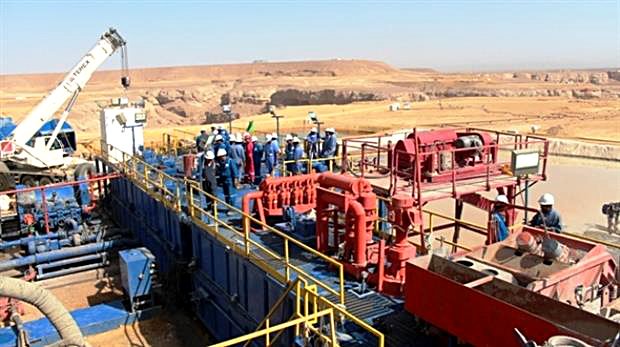
A decade of expansion after the first oil shipment
Since the first shipment of Masila crude was exported through Al-Shihr port in August 1993, Block (14) has entered a phase of continuous expansion in development and production operations.
Operations initially relied on fields whose commercial viability had been established in the early 1990s, foremost among them Sunah, Hajjah, and Kamal. Exploration and development activities then expanded to include other fields.
This phase included drilling additional wells, developing crude gathering networks, and increasing processing and transportation capacity, with the aim of making use of discovered reserves and raising production levels.
As the project advanced, Masila evolved from an emerging production area into an integrated oil complex comprising multiple fields, industrial facilities, and a pipeline network linking production areas to the export terminal on the coast of Hadramout.
2003: The highest reported production level
According to data from the Petroleum Exploration and Production Authority, production in the Masila sector reached its historical peak of approximately 233,000 barrels per day in 2003.
This figure reflects daily production at the peak, and is not necessarily the annual average production across every day of the year.
The figure also applies to Masila Block (14), and should not be confused with total production in Hadramout Governorate or Yemen’s production from all oil blocks.
This distinction is important when comparing historical figures: production data varies from one block to another, and actual production levels differ from the design capacities of pipelines and facilities.
Infrastructure that strengthened production and export capacity
Masila’s production expansion relied on a network of technical facilities, including oil gathering and processing stations, internal transportation lines, and the main pipeline extending to the Al-Shihr oil terminal.
The Masila–Al-Shihr pipeline, completed in 1993, was one of the most important infrastructure components enabling the export of large quantities of crude.
Official data indicate that the pipeline is approximately 138 kilometers long and 24 inches in diameter, with a maximum design capacity of approximately 325,000 barrels per day.
As Hadramout’s oil sector developed, the Masila system became linked to the transportation of crude from other blocks, strengthening its importance as strategic infrastructure extending beyond the boundaries of Block (14).
The impact of oil expansion on the economy
Masila’s rising production during the 1990s and the early 2000s strengthened the importance of the oil sector in the Yemeni economy, which relied heavily on crude exports to generate public revenue and foreign currency.
Operating the fields and facilities also required technical and logistical services, transportation, and contracting, and created direct and indirect employment opportunities. However, local benefit from oil resources and the extent of their impact on public services are subjects requiring separate study supported by budget and expenditure data.
Masila’s facilities, oil transportation pipelines, and the Al-Shihr terminal became economic assets of national importance, making their continued operation and protection matters tied to both the economy and security.
The production peak and the beginning of sustainability challenges
Reaching peak production in 2003 does not mean the sector maintained the same level in subsequent years.
Oil fields typically pass through stages of growth, stability, and natural decline in production. Crude extraction rates are affected by various factors, including reservoir pressure, investment in drilling and maintenance, and enhanced recovery techniques.
Over time, the Masila sector faced challenges related to maintaining production and developing remaining reserves, before political and security upheavals in Yemen in subsequent years compounded those challenges.
For this reason, the 2003 peak is an important historical point of comparison, but it alone is not enough to assess subsequent performance without reviewing production, investment, and reserve data for each year.
The economic and historical significance of the event
The year 2003 marks one of the most prominent milestones in Hadramout’s oil history, as the Masila sector reached its highest reported production level in its published records.
This event illustrates the scale of the sector’s development during the ten years since exports began, and the importance of early investment in fields and infrastructure.
It also helps explain the difference between the period of oil expansion and the subsequent challenges, leading up to the transfer of the sector’s operations to the national PetroMasila company in 2011, followed by the impact of the war and the suspension of exports in subsequent years.
Thus, 2003 is recorded as the production peak for the Masila sector and a pivotal period in the history of Hadramout’s oil industry.