
Commercial Oil Discovery in the Masila Basin in 1991 Opens a New Chapter in Hadramout’s Economy
The announcement of a commercial oil discovery in Block (14) in Hadramout Governorate on December 18, 1991, marked a major turning point in the history of the governorate’s oil industry, after Canadian Occidental and its partners successfully explored and evaluated the Sunah, Hajiya, and Kamel fields. The announcement paved the way for a shift from exploration and drilling to developing production facilities and laying a pipeline toward the coast of Al-Shihr, culminating in the export of the first shipment of Masila crude in August 1993, making Hadramout one of Yemen’s most important oil-producing centers.
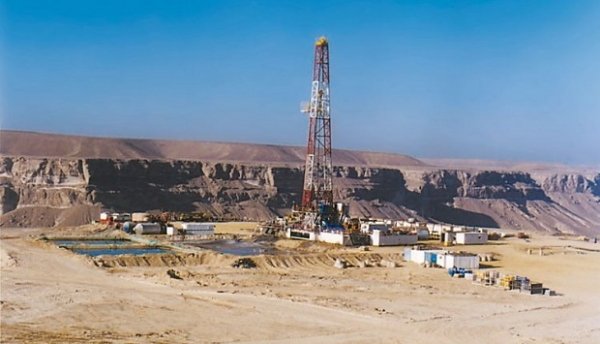
From Exploration to Commercial Discovery
Modern oil exploration in the Masila Basin began in the 1980s, when Canadian company Canadian Occidental obtained the concession to operate in Block (14) in 1987, as part of efforts to search for new oil reserves in eastern Yemen.
The block is located in the Seiyun–Masila Basin in Hadramout Governorate, a desert region with promising geological formations that nevertheless required major investments in geological surveys, well drilling, and infrastructure development.
After years of studies and drilling, the company made important oil discoveries at the Sunah field, followed by discoveries at the Hajiya and Kamel fields, strengthening indications that commercially recoverable quantities were present.
On December 18, 1991, Canadian Occidental, on behalf of its partners, announced the commercial viability of the three fields, beginning a new phase in the development of the block and the transformation of the discoveries into an integrated production project.
Three Fields Lay the Foundation for the Launch of Masila Oil
The Sunah, Hajiya, and Kamel fields formed the core of the first Masila oil project.
The Sunah field was one of the most prominent early discovery sites, with exploration tests recording encouraging oil flows before drilling and evaluation operations confirmed the presence of additional reservoirs in the area.
According to a specialized report published by Oil & Gas Journal in March 1992, recoverable reserves from the three fields at the time their commercial viability was announced were estimated at about 235 million barrels.
This figure was an initial estimate associated with that stage of exploration, not the total reserves subsequently discovered in the block.
The results encouraged the expansion of exploration and development operations, and further fields were discovered in the following years.
Transition from Discovery to Infrastructure Development
The announcement of commercial viability was not enough to begin exporting oil; an integrated system had to be built, including crude processing facilities, networks to gather oil from the fields, pumping stations, and a pipeline connecting to the coast.
The operating company began implementing a plan to develop the discovered fields and connect them to production facilities, as well as to build a pipeline approximately 138 kilometers long and 24 inches in diameter to transport oil from Masila to the export terminal in the Al-Shihr area on the Arabian Sea.
These essential facilities were completed during 1993, making it possible to move to commercial production and export crude to foreign markets.
On August 5, 1993, the first shipment of Masila oil departed via the Al-Shihr terminal, less than two years after the commercial discovery was announced.
How Did the Discovery Change Hadramout’s Oil Standing?
The Masila discovery opened the door to expanded oil investment in Hadramout and led to the construction of industrial facilities, transport pipelines, and export facilities that became an essential part of the governorate’s economic infrastructure.
It also strengthened Hadramout’s role in Yemen’s crude oil production and connected the desert production areas to the coast through infrastructure that was later used to transport oil from neighboring blocks.
Data from the Petroleum Exploration and Production Authority indicate that, since 1991, 18 commercial fields have been discovered and developed in the Masila block, and its production reached a historic peak of about 233,000 barrels per day in 2003.
These figures do not mean that all the fields had been discovered or were producing in 1991; rather, they reflect the expansion that took place in the years following the initial discovery.
The Economic and Historical Impact of the Discovery
Masila’s entry into production increased the importance of oil in the Yemeni economy during the 1990s.
In a study on the development of the Yemeni economy, the International Monetary Fund noted that the start of production in Masila in 1993 gave a significant boost to growth in the oil sector, alongside the national economy’s increasing reliance on oil revenues.
Over the years, the Masila fields and associated export facilities became among the most prominent strategic assets in Hadramout, explaining the economic and security importance they later acquired, particularly during periods of war and halted exports.
Thus, December 18, 1991, is a pivotal date in the history of Hadramout’s oil industry, marking the official transition from promising exploration discoveries to a project whose commercial viability had been established, and paving the way for the production and export of Masila crude.