
Saudi Arabia calls for the withdrawal of STC forces from Hadramout and the handover of camps to the Nation’s Shield Forces
Saudi Arabia announced, during meetings between its military delegation and sheikhs and dignitaries from the Wadi and Desert of Hadramout on December 9 and 10, 2025, that it was calling for forces affiliated with the Southern Transitional Council to withdraw from Hadramout and Al Mahrah and return to their previous positions, with the Nation’s Shield Forces taking responsibility for the camps and military sites. The announcement marked an important shift in efforts to reorganize military control in eastern Yemen.
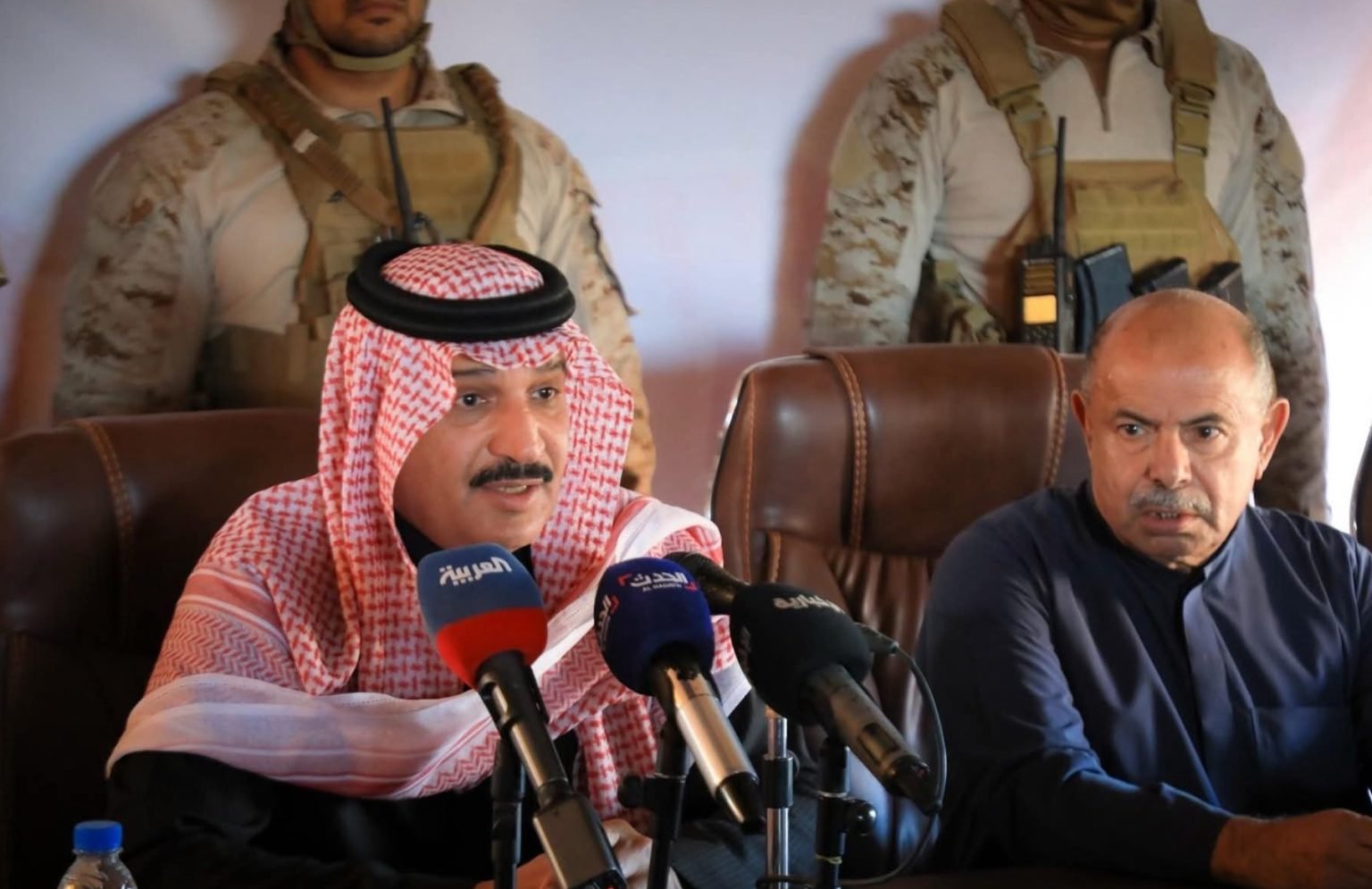
Hadramout Governorate witnessed an important political and military development on December 9 and 10, 2025, after the head of the Saudi delegation, Major General Mohammed bin Obaid Al-Qahtani, announced the Kingdom’s position on the military expansion carried out by forces affiliated with the Southern Transitional Council in Hadramout and Al Mahrah, stressing the need for them to withdraw and hand over the sites and camps to the Nation’s Shield Forces.
The Saudi position came about a week after the governorate witnessed sweeping developments on the ground, which resulted in the Southern Transitional Council forces taking control of Seiyun and sites belonging to the First Military Region, as well as a change in control over sites linked to oil facilities on the Hadramout Plateau.
As the military deployment extended toward Al Mahrah, the crisis shifted from a local dispute over the positions of forces to a regional issue concerning the future of military and security arrangements in the eastern governorates.
Meetings between the Saudi delegation and Hadramout sheikhs
On December 9, media outlets carried remarks by the head of the Saudi delegation during a meeting with sheikhs and dignitaries from the Wadi and Desert of Hadramout. He said that forces affiliated with the Southern Transitional Council would leave Hadramout and Al Mahrah, and that the Nation’s Shield Forces would take over the sites and camps as part of arrangements aimed at de-escalation.
The following day, CNN Arabic carried additional remarks by Al-Qahtani, in which he stressed opposition to drawing Hadramout into new conflicts and the importance of protecting community peace and restoring stability.
He explained that the Saudi position was based on the withdrawal of forces affiliated with the Southern Transitional Council from the two governorates, their return to their previous camps, and the transfer of military responsibilities to the Nation’s Shield Forces.
These remarks amounted to a clear announcement of the arrangements Saudi Arabia was seeking to implement, but they did not announce that the Southern Transitional Council forces had completed their withdrawal or that all sites had been transferred to the Nation’s Shield Forces on that date.
Why did the Saudi position take on particular importance?
The remarks came after a military operation changed the map of control in Wadi Hadramout in a short period.
Forces affiliated with the Southern Transitional Council advanced toward Seiyun in early December and took control of strategic military and administrative sites, while units of the First Military Region withdrew from their positions.
The movements later extended to Al Mahrah Governorate, making the issue one that went beyond Hadramout alone.
In this context, Saudi efforts were no longer limited to mediating between local parties over a facility or camp, but instead focused on addressing the issue of military deployment across both governorates as a whole.
According to an analysis later published by the Sana’a Center for Strategic Studies, Saudi Arabia repositioned units of the Nation’s Shield Forces toward the border areas of Al Abr and Al Wadi’ah, while seeking to contain the Southern Transitional Council’s military expansion.
The Nation’s Shield Forces at the center of the new arrangements
The Nation’s Shield Forces emerged as the military formation slated to take over the sites and camps that the Southern Transitional Council forces would be asked to vacate.
This proposal was important for two reasons: first, it offered a specific vision of the entity that would protect the sites after the withdrawal; second, it linked the redeployment process to military arrangements overseen by government bodies and supported by Saudi Arabia.
The matter was not limited to calling for the forces to leave; it also aimed to prevent a security vacuum in the camps and strategic sites.
However, implementing such arrangements required agreement among the parties concerned and clear handover mechanisms, making the transition from statements to realities on the ground an ongoing challenge in the following weeks.
The start of a withdrawal or the start of negotiations?
The Saudi statements coincided with reports that some posts and camps on the Hadramout Plateau had begun to be evacuated.
On December 9, Al-Mijhar published a report on the withdrawal of formations affiliated with the Southern Transitional Council from sites on the plateau and around oil facilities, citing local and media sources.
However, these reports do not establish that all forces withdrew from Hadramout and Al Mahrah, while the Saudi statements on those same two days continued to stress the need to complete the withdrawal.
It is therefore important to distinguish between reports of limited movements at some sites and the stated Saudi objective of the forces leaving both governorates entirely.
The Southern Transitional Council’s position and the continuation of the crisis
Despite Saudi demands, the military crisis was not resolved on December 9 and 10.
Forces affiliated with the Southern Transitional Council remained at a number of their positions, and disagreements continued over withdrawal arrangements and which party would assume security and military responsibilities.
The Sana’a Center notes that Riyadh continued its efforts to reposition forces, while the southern forces worked to consolidate their positions, leading to continued tension and mounting political and military pressure.
This means that the Saudi delegation’s statements marked the beginning of a new phase of the crisis, not its end.
From warnings to the official Saudi position
The significance of this phase became clearer on December 25, 2025, when the Saudi Ministry of Foreign Affairs issued an official statement saying that the Southern Transitional Council’s military movements in Hadramout and Al Mahrah had been carried out unilaterally, without the approval of the Presidential Leadership Council or coordination with the coalition leadership.
The ministry revealed joint Saudi-Emirati efforts to arrange for the forces to return to their previous positions and hand over the camps to the Nation’s Shield Forces and the local authority.
The December 25 statement is a separate development that merits documentation in a later event, but it confirms that the demands announced by the Saudi delegation on December 9 and 10 had become part of a broader official position on the crisis.
The military and political significance of the event
The Saudi delegation’s statements on December 9 and 10, 2025, marked a pivotal point in the course of security and military changes in Hadramout, shifting the discussion from the consolidation of military control to withdrawal and the redistribution of responsibilities.
They also placed the Nation’s Shield Forces at the forefront of the proposed plans for managing the camps and strategic sites, and showed that the future of military deployment in Hadramout had become directly linked to the positions of influential regional actors.
The announcement did not immediately end the crisis, but it set out one of the main paths along which events would develop in the second half of December and early January 2026.
This event is therefore recorded as the beginning of the public announcement of Saudi arrangements to reshape military deployment in Hadramout and Al Mahrah, days after the changes on the ground in the two governorates.