Agreement under Saudi sponsorship to contain military escalation around PetroMasila facilities
The local authority in Hadramout and the Hadramout Tribal Alliance reached a de-escalation agreement on Wednesday, December 3, 2025, under Saudi sponsorship and with local mediation, following rising tensions around PetroMasila facilities. The agreement stipulated an end to the escalation, the redeployment of forces, the resumption of employees’ work, and the establishment of joint security arrangements to protect oil facilities, in an effort to prevent the military confrontations from spreading across the governorate.
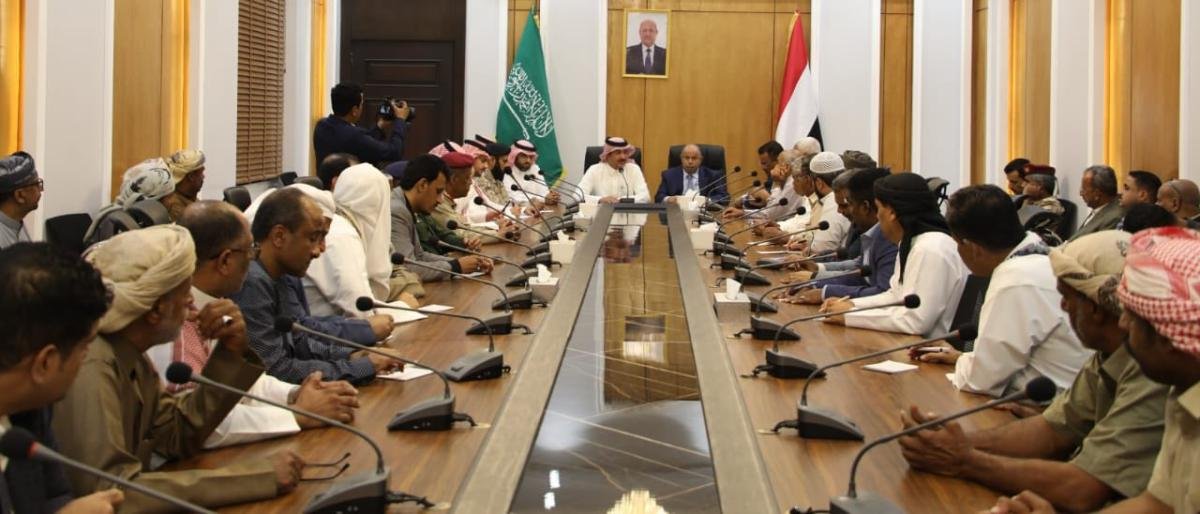
On Wednesday, December 3, 2025, an agreement to de-escalate tensions between the local authority and the Hadramout Tribal Alliance was announced in Mukalla, the capital of Hadramout Governorate, following days of military tension around the facilities of the PetroMasila oil company on the Hadramout Plateau.
The agreement came at an extremely sensitive time, coinciding with extensive military movements in Wadi Hadramout and changes on the ground at several strategic locations, heightening fears that the escalation could spread to the oil facilities and surrounding areas.
The agreement was signed by Hadramout Governor Salem Ahmed Al-Khanbashi, representing the local authority, and Sheikh Amr bin Habrish, representing the Hadramout Tribal Alliance, in the presence of a Hadrami mediation committee and under the supervision of a Saudi delegation.
The agreement included thirteen articles addressing an end to the escalation, redeployment, and the organization of facility protection, as well as measures intended to ensure the continuity of oil operations and prevent company sites from being used as arenas for military confrontation.
Background to the Agreement
The immediate crisis began on November 29, 2025, when the Hadramout Tribal Alliance announced the deployment of units from the Hadramout Protection Forces in the Al-Masila oil fields, saying the aim was to secure the facilities and protect the governorate’s resources.
In response, the leadership of the Second Military Region objected to the movements and accused forces affiliated with the alliance of entering sites protected by the Company Protection Forces.
The differing positions of the two sides led to rising tensions around the oil facilities, at a time when Hadramout was witnessing rapid military movements across the valley and desert.
As the likelihood of confrontation increased, the need emerged for an understanding that would define force deployment locations, prevent new reinforcements, and reorganize security responsibilities within the facilities.
Hadrami Mediation under Saudi Sponsorship
A diplomatic and political effort took place in Mukalla alongside the arrival of a Saudi delegation headed by Mohammed Al-Qahtani, which held meetings with the local authority’s leadership and representatives of Hadrami groups.
The consultations focused on reducing tensions, maintaining stability in the governorate, and preventing military disputes from turning into a broader confrontation that would threaten vital facilities.
The efforts resulted in an agreement between the local authority and the Hadramout Tribal Alliance, with the participation of a mediation committee comprising social and tribal figures, and under the supervision of the Saudi delegation.
Saudi sponsorship was an important element of the agreement, given that it coincided with other military movements taking place in Hadramout during the same days.
Key Provisions of the De-escalation Agreement
Hadramout Protection Forces
1 kmMinimum withdrawal distance beyond the company perimeter
Supporting Elite Forces
3 kmRequired withdrawal distance from current positions
Number of agreement provisions
13Articles regulating de-escalation and security arrangements
Withdrawal start time
8:00Thursday morning, December 4, 2025
The agreement stipulated an immediate halt to military, security, media, and incitement-related escalation, with the truce to continue until the mediation committee had completed its work and a comprehensive settlement had been reached.
On the ground, the agreement required the Hadramout Protection Forces affiliated with the alliance to withdraw to a distance of no less than one kilometer beyond the PetroMasila perimeter, while ensuring that the movement of employees and people assigned civilian and military duties inside the facilities was not obstructed.
It also stipulated that the Company Protection Forces return to their previous positions and that PetroMasila employees resume their work.
As for the Supporting Elite Forces, the agreement provided for their withdrawal to a distance of no less than three kilometers from their current positions, with their return to their original positions following a final agreement.
The agreement prohibited either side from reinforcing its forces while the de-escalation measures were being implemented. It also stipulated that Governor Al-Khanbashi and Sheikh bin Habrish meet in the Al-Ulayb area after the withdrawals had been carried out.
Reorganizing Protection of the Oil Facilities
The agreement’s provisions were not limited to halting the escalation; they also included a plan to reorganize the force responsible for protecting the oil companies.
The understandings provided for members and officers of the Hadramout Protection Forces to join the Company Protection Forces, according to lists submitted by the leadership of those forces, while personnel who originally belonged to the military and security institutions would return to their duties.
The agreement also named Brigadier Ahmed Omar Al-Maari as commander of the unified force, with its chief of staff to be drawn from officers of the Hadramout Protection Forces. The force would remain stationed at the oil facility protection sites, without being reinforced by forces from outside Hadramout.
It also included a commitment by the parties concerned to adopt a unified position if forces from outside the governorate advanced toward the company sites in Al-Masila.
As for Sheikh Amr bin Habrish, the agreement stipulated that he would remain at his own location with his guards and aides, with no armed civilian presence at the site.
These arrangements show that the agreement went beyond addressing a temporary military deployment and proposed a framework for managing security protection at the oil facilities, although its implementation remained dependent on actual follow-through and subsequent understandings.
Significance and Implications of the Agreement
The December 3 agreement represented an attempt to contain one of the most prominent centers of military tension in Hadramout, particularly because the dispute centered on economically important facilities of strategic significance.
It also reflected the role of local mediation and Saudi sponsorship in seeking to reconcile competing parties and prevent the dispute over military deployment from turning into open confrontation inside oil-producing areas.
However, the signing of the agreement did not mean that all tensions in Hadramout had ended. It coincided with separate military developments in Wadi Hadramout, including the advance of Southern Transitional Council forces toward Seiyun and other military sites.
It is important to distinguish between what the agreement stipulated and what was actually achieved: its provisions set out obligations and timelines for withdrawal and redeployment, but do not by themselves prove that all measures were fully implemented on the ground.
Thus, the Mukalla agreement of December 3, 2025, stands as a pivotal political and security milestone amid military shifts in Hadramout. It combined an effort to halt the escalation with an attempt to reorganize protection of the oil facilities, at a time when the governorate was entering a new phase of extensive changes on the ground.