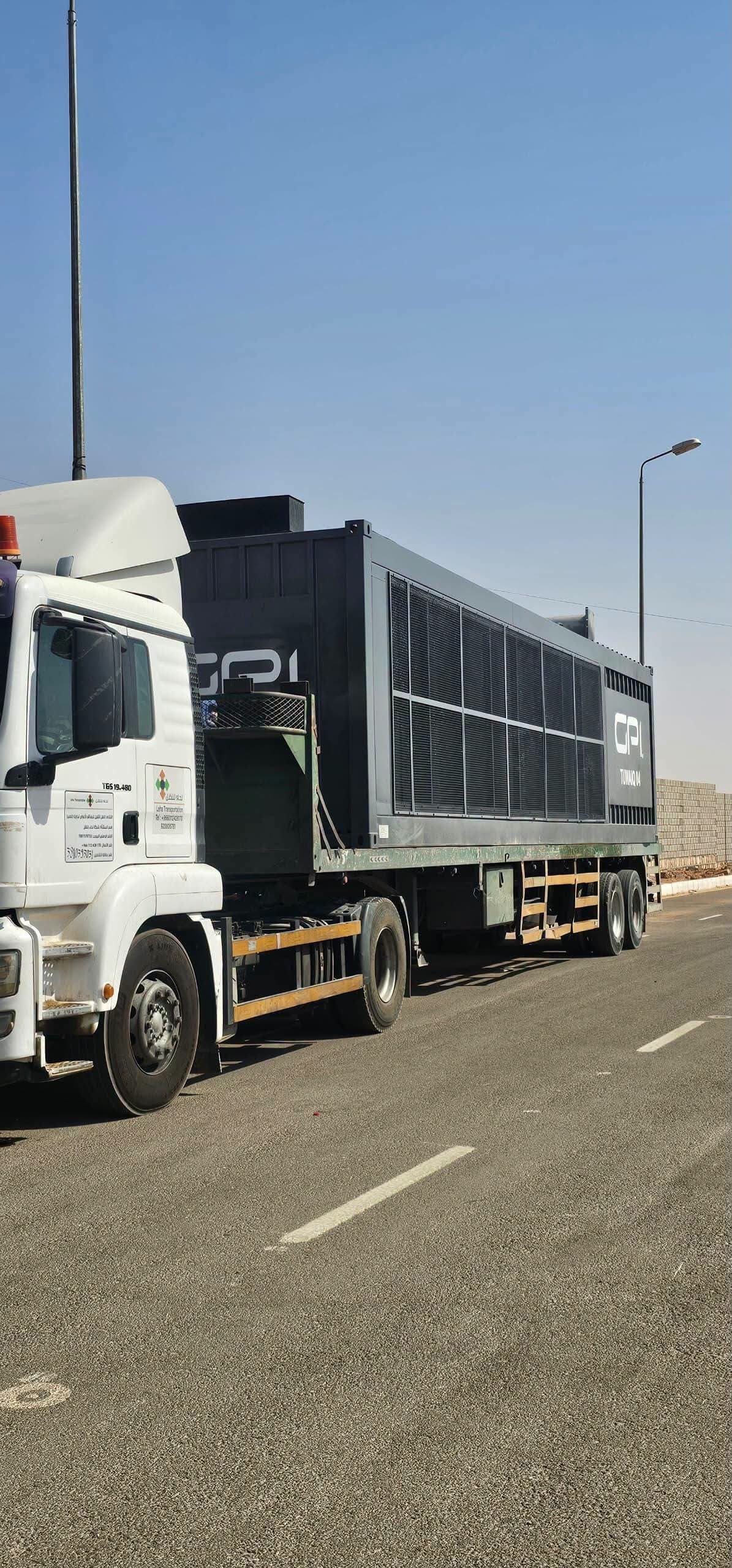
Arrival of First Batch of Saudi Generators Opens New Implementation Phase for Electricity Projects in Hadramout
Hadramout Governorate received on Wednesday, July 1, 2026, the first batch of emergency electricity generators arriving from the Kingdom of Saudi Arabia via the Al Wadiah land crossing, as part of a project to provide a total generating capacity of 200 megawatts, divided equally between the coast and the valley. The step marks the project’s transition from the announcement and preparation phase to the arrival of equipment, ahead of its installation and operation.
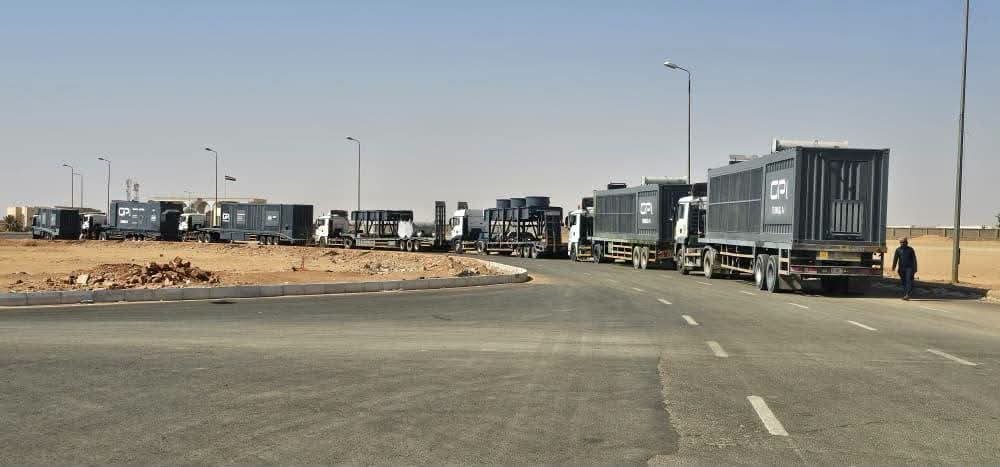
Hadramout Governorate’s electricity sector saw a new development on Wednesday, July 1, 2026, with the arrival of the first batch of emergency electric power generators provided by the Kingdom of Saudi Arabia via the Al Wadiah land crossing, as part of a project aimed at boosting generating capacity and easing the crisis of recurring outages in coastal and valley cities and areas.
The arrival of the equipment marked a practical step in implementing the emergency power station project, which had been announced and whose components’ foundation stones were laid in April of the same year, as part of efforts to address the electricity deficit that the governorate has suffered for years.
The generators are part of a project funded by the Saudi Program for the Development and Reconstruction of Yemen and implemented by Gulf International Energy Company, with a planned total capacity of 200 megawatts, divided into 100 megawatts for the Hadramout coast and 100 megawatts for Wadi Hadramout.
Hadramout Governor and member of the Presidential Leadership Council Salem Ahmed Al-Khanbashi said the arrival of the first batch marks the beginning of a new phase in implementing the project, noting that additional batches of generators and equipment will arrive successively in the cities of Mukalla and Seiyun in the coming period.
This step comes as the coastal and valley electricity systems face mounting challenges, most notably limited generating capacity relative to the level of demand, recurring technical faults, irregular fuel supplies, and operational pressures that increase during the summer.
Before the generators arrived, the relevant authorities on the Hadramout coast had begun preparing the sites designated for the project. On June 3, the governor inspected work to level and fence the emergency power station site and reviewed the progress of preparations in the areas of Ambikha and Joul Mas'hah.
According to coverage published at the time, site preparation work was about 80% complete, with preparations continuing to receive and install the generators and connect them to the electricity grid.
In Wadi Hadramout, the project is linked to the two planned stations in Al Ghuraf and Badrah, whose foundation stones were laid on April 15, 2026, with a total capacity of 100 megawatts.
The distribution of stations between the coast and the valley reflects an effort to boost generation in both systems rather than concentrate the additional capacity in one area, particularly as each system has its own technical and operational challenges and associated networks.
With the first batch arriving via the Al Wadiah crossing, the project entered a new logistical phase requiring the equipment to be transported to its designated sites, civil and technical preparations to be completed, and the generating units to be installed and undergo the necessary tests before being connected to the public grid.
The local authorities said engineering and technical teams are continuing to complete arrangements for installing and operating the generators, in an effort to accelerate the use of the new capacity and ease the hardship faced by residents.
The importance of this phase lies in the fact that the arrival of the equipment represents tangible progress compared with the project’s announcement phase, but does not mean that the 200-megawatt capacity is actually available to consumers.
Putting the generators into service requires the completion of installation, preparation, testing, and connection, as well as the provision of the operational requirements needed to ensure stable generation once they begin operating.
The first batch does not necessarily represent all the generators required for the project, as official statements confirmed that the equipment would arrive in successive batches, without specifying the exact generating capacity of the generators that arrived that day.
The arrival of the generators is particularly significant given its timing amid the continuing electricity crisis in Hadramout, where outages and generation shortfalls have remained among the main service challenges facing residents, despite the emergency projects and measures announced in previous years.
The event of July 1, 2026, marks a pivotal point in the chronology of the electricity crisis in the governorate, documenting the transition from laying the foundation stone and initial preparations to the delivery of equipment on the ground.
The next phase—installing and actually operating the generators and measuring their impact on supply hours—remains the most important indicator for assessing the project’s success in easing the electricity crisis and improving service stability in Hadramout.
Sources
Photos