
Fuel Crisis and Transmission Line Faults Take Al-Rayyan Power Station Offline, Worsening Power Outages in Mukalla
The Hadramout Coast electricity system experienced a sharp deterioration after the Al-Rayyan central power station went offline due to a fault in 132-kilovolt power transmission lines, amid a shortage of operating fuel and declining readiness at power stations, worsening outages in Mukalla, its outskirts and coastal cities.
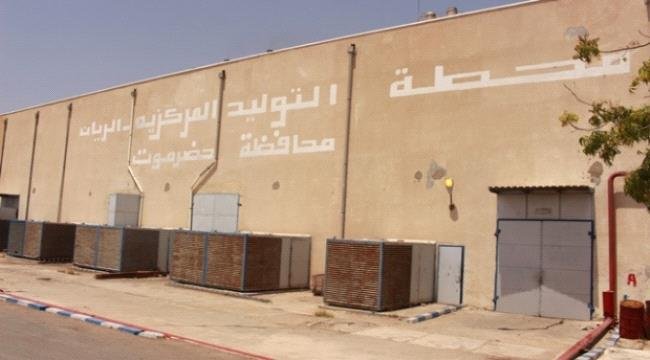
The electricity sector on the Hadramout Coast faced a new operational crisis on Tuesday, October 22, 2024, when the Al-Rayyan central power station went offline following a technical fault in the power transmission lines extending from the station to Mukalla, at a time when the system was already suffering from a fuel shortage and reduced generating capacity.
The Public Electricity Corporation on the Hadramout Coast said the fault affected 132-kilovolt power transmission lines, preventing electricity from being transmitted from the Al-Rayyan central power station to the grid and causing the station to stop operating in the morning.
This development coincided with declining readiness at several power stations due to insufficient fuel supplies, increasing the gap between electricity production and consumer needs and contributing to longer power outages in Mukalla, its outskirts and other areas along the governorate’s coast.
The corporation explained that the fuel shortage not only reduced generating capacity but also coincided with problems in transmission lines and distribution networks, compounding the technical challenges facing the system during that period.
Engineering and technical teams began tracing the fault and repairing the damaged transmission lines on the morning of the incident, with the aim of bringing the Al-Rayyan central power station back online and increasing the electricity available to the grid, thereby helping to reduce outage hours.
The October crisis continued a steady deterioration in electricity service on the Hadramout Coast during 2024. In August, the corporation had announced that a shortage of diesel supplies had forced some generators out of service and increased outage hours, amid difficulties in maintaining stable power generation.
During August of the same year, outages in Mukalla and other coastal cities lasted about three hours, compared with two hours of service, according to a report by the Sana’a Center for Strategic Studies, which noted that the electricity crisis overlapped with disputes over fuel supplies between local authorities and influential parties in the governorate.
In an effort to ease the crisis, the Hadramout Coast Electricity Corporation announced that it had received quantities of diesel between August 7 and 21, 2024: 1,775,500 liters from the Yemen Petroleum Company, in addition to 1,123,798 liters as part of a grant from PetroMasila, on the instructions of then-Governor of Hadramout Mabkhout Mubarak bin Madi.
However, continued challenges in securing fuel and maintaining power stations and networks left the system vulnerable to repeated disruptions, as was seen again when the Al-Rayyan station went offline in October.
The crisis revealed the interdependence of three key elements in the electricity sector: generating capacity, fuel availability, and the integrity of transmission and distribution lines. A failure in any one of them can reduce service, even when power stations capable of generating electricity are available.
The shutdown of the Al-Rayyan central power station was one of the most significant technical developments of 2024, given the station’s role in the Hadramout Coast electricity system and the effect of its outage on the stability of electricity supplies in Mukalla and areas connected to the grid.
The incident is particularly significant in the chronology of the electricity crisis in Hadramout, as it reflects the crisis’s shift from fuel shortages and generation deficits to simultaneous disruptions in energy transmission infrastructure, highlighting the need for integrated solutions that include securing fuel, rehabilitating power stations, maintaining transmission lines and upgrading networks.