Dead and injured in Mukalla protests amid clashes between security forces and supporters of the STC
The city of Mukalla witnessed bloody clashes on Saturday, April 4, 2026, during demonstrations organized by supporters of the Southern Transitional Council, despite security warnings against holding gatherings without permits. Gunfire left at least two people dead and others injured, amid mutual accusations between the local authorities and the Southern Transitional Council over responsibility for the violence. Presidential Leadership Council Chairman Rashad al-Alimi ordered an urgent investigation and the referral of the case to the Public Prosecution, in a development that brought security and political tensions back to Hadramout’s capital.
Mukalla sees a new security escalation
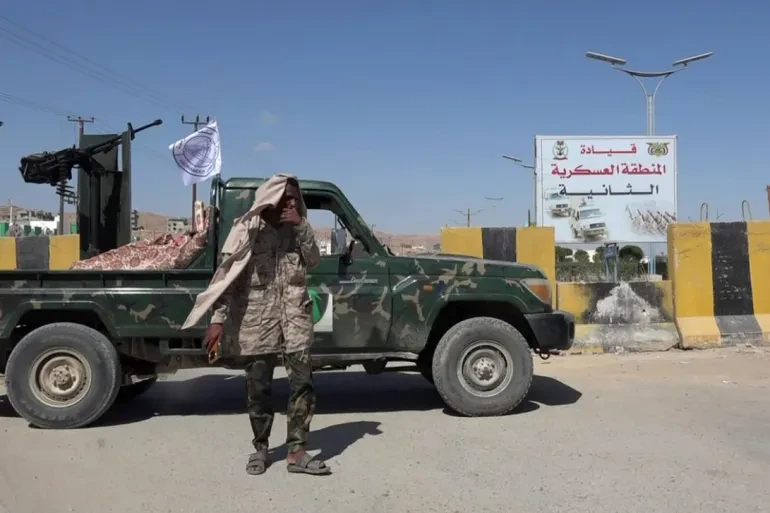
Mukalla, the capital of Hadramout governorate, was once again at the center of security and political tensions on Saturday, April 4, 2026, after clashes broke out between security and military forces and protesters supporting the Southern Transitional Council.
The events came about three months after the military shifts in Hadramout in early January, which ended with government forces regaining control of Mukalla, Al Riyan Airport, military camps and strategic facilities.
Although the main phase of the military clashes had ended, political disagreements over the future of the Southern Transitional Council and its role in the governorate continued, taking the form of gatherings and protests in February and March.
The events in April marked a dangerous escalation, as the protests turned into clashes that left people dead and injured, reviving fears of renewed unrest along the Hadramout coast.
Security warnings precede the demonstration
The demonstration was preceded by tight security measures and the deployment of military and security units on several streets and at entrances to Mukalla.
The leadership of the Second Military Region and security agencies issued warnings against taking part in gatherings that had not obtained permits from the governorate’s security committee, stressing that events must be organized in accordance with legal procedures.
The warnings were issued in implementation of directives from Hadramout Governor Salem Ahmed al-Khanbashi, in his capacity as head of the security committee, amid authorities’ concerns about unrest or the exploitation of gatherings to incite violence.
Meanwhile, supporters of the Southern Transitional Council insisted on holding the demonstration, affirming their right to express their political positions and rejecting the restrictions imposed on the council’s activities.
As the event drew closer, tensions escalated between the deployed forces and the protesters.
Protesters take to the streets of Mukalla
Supporters of the Southern Transitional Council gathered and marched in several areas of Mukalla, raising southern flags and pictures of council chairman Aidarus al-Zoubaidi.
The activity was concentrated in areas including Khor Mukalla and Al-Dis, with attempts to reach the main gathering sites.
Participants chanted slogans rejecting what they described as foreign interference in southern affairs and expressing support for the continued existence of the Southern Transitional Council and its political project.
They also called for security arrangements in Hadramout to be reorganized and for security duties to be assigned to the Hadrami Elite Forces.
Military vehicles, checkpoints and roadblocks were deployed across the city as security agencies sought to regulate movement and prevent some gatherings from reaching the designated event sites.
Videos circulated by media outlets showed moments of tension and gunfire near some of the gatherings.
Gunfire leaves people dead and injured
The demonstrations turned into clashes involving gunfire, leaving casualties among participants.
Agence France-Presse reported, according to Al Jazeera Net, that a medical source had said two people were killed and four others injured in the clashes.
By contrast, local and human rights sources said the death toll had risen to three, while estimates of the number of injured varied.
Yemen Daily News reported three people killed and three injured, while South24 Center’s initial coverage documented two deaths and four injuries.
Because of the varying figures published, the number confirmed by more than one report is at least two killed, while later reports put the death toll at three. The sources reviewed did not provide a unified final judicial or medical tally.
Authorities accuse armed individuals of fomenting chaos
The local authority and the Hadramout Governorate Security Committee issued a statement on the events, saying that armed individuals wearing civilian clothing had opened fire on security and military forces while they were carrying out their duties.
The statement accused political groups of incitement and organizing unauthorized gatherings, despite prior warnings about the risks of escalation.
The authorities also said that people had come from outside Hadramout and accused some of them of attempting to destabilize security and stability.
Security agencies affirmed that they would deal with the attacks in accordance with the law, and that the deployment of forces was intended to protect the city and its institutions.
These accusations remain part of the official account of the events and do not, on their own, constitute judicial proof that specific individuals were responsible for the gunfire.
Southern Transitional Council accuses forces of using excessive force
The Southern Transitional Council, for its part, held the local authorities and security and military forces responsible for the casualties.
The council accused the forces of using live ammunition and excessive force against participants in a demonstration it described as peaceful.
It rejected the authorities’ account that armed individuals were among the protesters, considering the accusations an attempt to justify the security intervention.
It also called for those responsible for the gunfire to be held accountable and for citizens’ right to assemble and express their political views to be respected.
The conflicting positions highlighted the widening disagreement over how the clashes began and who was responsible for the casualties, strengthening calls for an independent investigation.
Human rights calls for investigation and accountability
The events prompted reactions from human rights groups, particularly after videos showing gunfire and casualties circulated.
The Civil Network for Media, Development and Human Rights issued a statement condemning the use of live ammunition against protesters and calling for an urgent, independent investigation and accountability for those responsible for any violations substantiated by evidence.
It also called for medical care for the injured, guarantees for the safety of detainees and respect for the right to peaceful assembly.
This issue is particularly significant because the handling of demonstrations must distinguish between peaceful participants and anyone proven to have been involved in acts of violence, and the use of force must be consistent with necessity and proportionality.
Determining individual responsibility for the casualties remained contingent on the findings of official investigations and any subsequent independent reviews.
Al-Alimi orders an urgent investigation
Following the events, Presidential Leadership Council Chairman Rashad al-Alimi called Hadramout Governor Salem Ahmed al-Khanbashi to learn about the circumstances of the clashes and the measures taken.
Al-Alimi ordered an urgent and transparent investigation into the events and the referral of the case file to the Public Prosecution to take the necessary legal measures.
The directive came amid mounting reactions to the casualties and the need to determine responsibility and prevent a recurrence of the clashes.
The intervention by the Presidential Leadership Council presidency acknowledged the seriousness of what had happened and its impact on the security and political situation in Hadramout.
However, the issuance of an order to investigate does not mean that the investigation has been completed or that responsibility has been established against any particular party. Any subsequent judicial findings must therefore be documented independently.
Political repercussions extend beyond Mukalla
The repercussions of the events spread to southern political circles, where the southern delegation in Riyadh announced the suspension of its official activities in protest over the casualties, calling for a transparent investigation and accountability for those responsible.
The position came amid continued division over the announcement dissolving the Southern Transitional Council, issued from Riyadh in January 2026, and differing views among its leaders on the future of its political activity.
The clashes brought to the fore disagreements over security management in Hadramout, the limits of the role of military formations and the right of political forces to organize public events.
They also showed that the restoration of military control over the governorate had not ended political tensions, but had ushered them into a new phase of protests and popular demands.
The security and political significance of the event
The events of April 4, 2026, marked one of the most serious episodes of internal tension in Hadramout since government forces regained control of the governorate in early January.
The clashes revealed continuing political divisions and raised questions about the management of public gatherings, the use of force and the protection of civilians.
The deaths and injuries, together with presidential orders for an investigation, also marked a significant shift, turning the issue from a dispute over organizing a demonstration into a security and human rights case requiring legal accountability.
Thus, April 4, 2026, will be recorded as a pivotal moment in the post-military-clashes period in Hadramout, once again testing the ability of security and political institutions to manage disagreements without resorting to violence.