
Power Outages Spark Angry Protests in Mukalla Amid Severe Fuel Crisis
Mukalla witnessed angry public protests after electricity was cut for around 15 hours on the previous day. Protesters closed main roads in the Al-Sharj and Al-Dis neighborhoods amid a worsening fuel crisis and rising temperatures, as the government announced urgent measures to provide mazut for power stations.
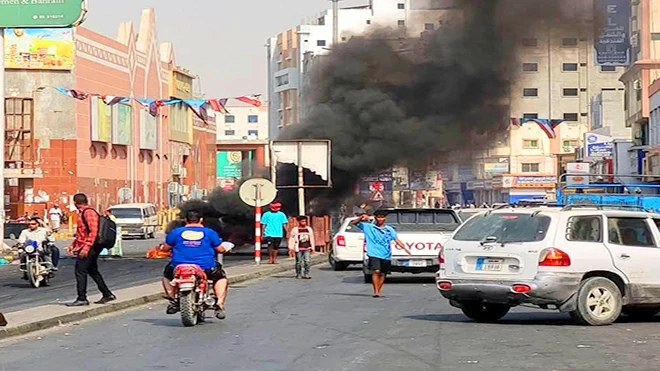
Mukalla, the center of Hadramout Governorate, witnessed a wave of public protests on Tuesday, July 16, 2019, over a sharp deterioration in electricity service, after the city experienced lengthy outages lasting around 15 hours on the previous Monday, as temperatures and humidity rose.
The protests spread to a number of main roads in the Al-Sharj and Al-Dis neighborhoods, where protesters closed major routes, causing traffic congestion, disrupting the movement of trucks and tanker trucks, and creating vehicle backups, in a scene that reflected growing public discontent over the continued decline in service.
The demonstrations came amid a worsening crisis in fuel supplies needed to operate the power stations. This affected available generating capacity and increased outage hours, placing additional burdens on residents and commercial and service activities.
In an effort to contain the crisis, the Ministry of Electricity and Energy announced that a ship carrying 3,821 tons of mazut had arrived at Aden Port late on Monday evening, July 15, to support the operation of electricity generators in Mukalla and the districts of the Hadramout coast.
The ministry also disclosed that 12 additional tanker trucks loaded with mazut had been dispatched from the Aden Refinery, as part of emergency measures to provide fuel to the affected stations, and pledged to send other shipments in the following days to help reduce outage periods.
These measures reflected the extent to which power station operations depend on a continuous supply of fuel, and the direct service disruptions that may result if supplies are interrupted, particularly during the summer months, when demand for energy rises.
The protests were not merely a reaction to a temporary outage; they came amid residents’ cumulative hardship from fluctuating electricity supplies, alongside calls to improve service and provide more sustainable solutions to reduce the recurrence of seasonal crises.
At that stage, the electricity crisis emerged as a service issue with social and economic repercussions: outages affected daily life and raised concerns about the continued deterioration of basic services in a city that is Hadramout Governorate’s leading administrative and economic center.
The protests of July 16, 2019, marked an important point in the history of the electricity crisis on the Hadramout coast, as the effects of fuel shortages and declining generation spilled into the streets, placing increasing pressure on the relevant authorities to find urgent remedies.
The event is significant in the chronology of the issue as an early example of the interplay between operational crises at power stations and community protests—a pattern that recurred in subsequent years as challenges related to fuel, generation, and grid stability persisted.