
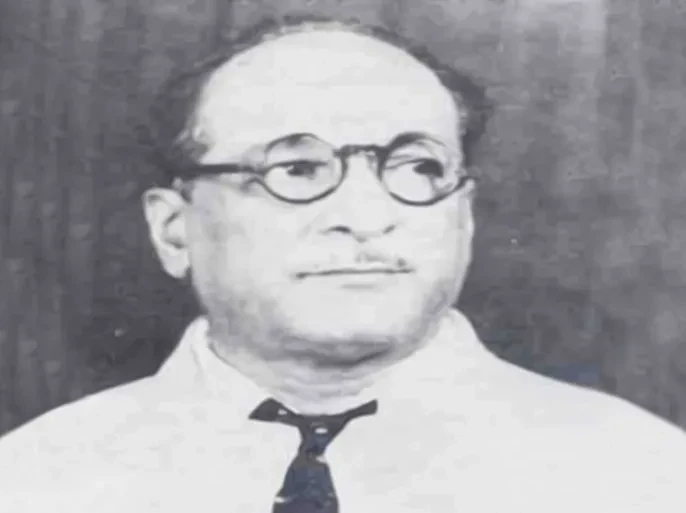
Muhammad Juma Abdulrazzaq Khan
Artist Born: 1903, Daw'an District Died: 25 December 1963 Daw'an
Muhammad Juma Khan, a Hadrami artist, composer and musician, was born in 1903 and is considered one of the leading pioneers of renewal in Hadrami song during the 20th century. In his work, he brought together Hadrami melodies with Arab and Indian influences, and led the Sultanate’s musical band before establishing his own band in 1947. He helped spread Hadrami singing in Yemen, the Gulf countries and East Africa, and left hundreds of recordings and musical works before his death in Mukalla on December 25, 1963.
Biography
Birth and Early Life
Artist Muhammad Juma Abdulrazzaq Khan was born in 1903 in Hadramout. Several historical and journalistic sources suggest that his birthplace was the village of Qarn Majid in Wadi Daw'an.
He came from a family with both Indian and Hadrami roots. His father was of Punjabi Indian origin and was among the military personnel brought to Hadramout by the Sultan al-Qu'aiti, while his mother was Hadrami, from the Daw'an area, and was named Fatima Ahmed Bahyan, according to one published account.
Muhammad Juma Khan grew up in a family environment that valued singing and music. His father enjoyed listening to Arab and Indian song records, and several of his siblings played instruments and sang, helping his artistic talent emerge from childhood.
This cultural diversity helped shape his musical identity, and he later became one of the most prominent artists to combine Hadrami heritage with musical influences from India and Arab countries.
Education and Artistic Beginnings
He received his early education in the city of Mukalla, where he learned to read and write and memorized some Quranic verses at traditional religious schools before enrolling in primary school.
During his school years, he showed a keen interest in singing and school anthems, and was distinguished by his ability to memorize melodies and repeat them.
He did not receive regular academic music instruction, but gained his expertise through practice, listening and interaction with musicians.
He also benefited from Mukalla’s artistic environment, particularly the musical bands associated with the Qu'aiti Sultanate and popular singing gatherings.
Joining the Sultanate’s Musical Band
In 1918, Muhammad Juma Khan joined the musical band of the Qu'aiti Sultanate, at approximately 15 years of age.
He began his musical career playing several instruments and trained on the simsimiyya and brass instruments, including the clarinet.
In its early days, the band performed military pieces and Indian and Western melodies, before expanding its repertoire to include Arab and Hadrami music.
Muhammad Juma Khan demonstrated musical ability that saw him rise through the band’s ranks until he took over its leadership, beginning an important phase of his artistic career.
During his leadership, he worked to incorporate Arab and popular Hadrami melodies into the band’s program, a step that helped broaden its musical repertoire.
Learning the Oud and Developing His Skills
The oud was one of the main instruments associated with Muhammad Juma Khan’s career, and he learned to play it with the help of artist Saeed al-Abd.
He also benefited from artist Saadullah Faraj in learning about traditional Hadrami melodies and playing the qanbus.
He followed Arab music, as well as the Indian melodies he had encountered in his family environment and the Sultanate’s band.
Through this experience, he developed a distinctive style of playing and composition, based on combining local authenticity with innovation in rhythm and musical arrangement.
Establishing His Own Musical Band
In 1947, Muhammad Juma Khan left his work with the Sultanate’s band after nearly 29 years with it, and devoted himself to pursuing his artistic career independently.
He established his own musical band, which included a group of well-known musicians, and added a variety of instruments, including the violin and percussion instruments.
Establishing his band allowed him to move into a more independent phase in selecting and composing song lyrics and presenting them to audiences.
He began performing at concerts and social occasions, and his fame grew in the cities of Hadramout, particularly Mukalla, Al-Shihr and the cities of the valley.
This band became one of the notable milestones in the development of Hadrami musical performance during the 20th century.
His Role in Developing Hadrami Song
Muhammad Juma Khan is considered one of the leading pioneers of the renewal movement in Hadrami song.
He drew on popular singing styles, including Hadrami muwashshahat and traditional sung poems, and worked to present them in different musical forms.
He also incorporated some Indian and Arab rhythmic influences into his melodies without abandoning the essential characteristics of Hadrami singing.
His work was not limited to love songs; he also presented patriotic, social and religious works, and sang poems by a number of Arab poets.
This diversity helped expand his audience and contributed to Hadrami song reaching broader cultural spheres.
Recording Songs and the Spread of His Work
As his fame grew, Muhammad Juma Khan began recording his work on records, one of the main means of spreading music during the first half of the 20th century.
Sources indicate that he recorded around 140 records with several recording companies, in addition to works he performed for Aden Radio.
The recordings were an important means of preserving part of his musical output and helped his voice reach listeners beyond Hadramout.
They also helped introduce Arab audiences to Hadrami melodies and gave later artists the opportunity to listen to his work and benefit from it.
His Artistic Activities in Aden
The city of Aden was an important stop in Muhammad Juma Khan’s career, particularly as radio, commercial and cultural activity developed there.
He performed at social occasions and took part in recording a number of his works for institutions and companies operating in the audio-recording field.
Aden also gave him the opportunity to connect with musicians and artists from a variety of singing traditions, helping to enrich his artistic experience.
His name became known among audiences in Aden and Hadramout, and his recordings helped spread his musical style.
His Travels to the Gulf Countries and East Africa
Muhammad Juma Khan’s activities were not confined to Yemen, but extended to a number of countries with large Hadrami communities.
He traveled to Kenya, Ethiopia, Somalia and Djibouti, where he performed at concerts and artistic occasions.
He also visited Saudi Arabia and Kuwait, presenting his songs to diverse audiences from Yemen and the Gulf.
Sources indicate that he spent a period in Saudi Arabia, during which he was influenced by some Hijazi and Najdi singing styles.
His visit to Kuwait in 1960 was one of the well-known milestones in his career. He performed concerts and recorded a number of songs during his stay there.
His travels helped strengthen the presence of Hadrami singing among communities historically connected to Hadramout, especially in the Gulf countries and East Africa.
His Influence on Later Artistic Generations
Muhammad Juma Khan’s work became one of the most important artistic references in the history of Hadrami song.
A number of artists who came after him benefited from his style of performance and composition and his approach to popular and classical poems.
He also helped develop the use of musical instruments in singing bands and encouraged greater rhythmic and melodic diversity.
His name became associated with an important phase in the transition of Hadrami song from traditional gatherings to commercial recordings and radio broadcasts.
Death and Artistic Legacy
Muhammad Juma Khan died on Wednesday, December 25, 1963, in the city of Mukalla in Hadramout Governorate, at the age of approximately 60.
His funeral procession took place in the city, and he was buried in Yaqub Cemetery in Mukalla.
After his death, interest in his artistic legacy continued through studies and cultural events that explored his work.
In September 2006, a festival in his name was held in Sana'a to document his work and highlight his contributions to the development of Hadrami song. A book titled “Muhammad Juma Khan… The Everlasting Hadrami Song” by writer Aziz al-Tha'alibi was also published.
Muhammad Juma Khan remains one of the prominent artistic figures in Hadramout’s history, for his contributions to modernizing Hadrami singing and spreading it beyond Yemen.
Works
1. Leading the Sultanate’s musical band: He led the Qu'aiti band and worked to expand its repertoire to include Arab and Hadrami melodies. 2. Establishing an independent musical band in 1947: He founded his own band and helped develop musical performance through the use of a variety of instruments. 3. Renewing Hadrami song: He presented melodies that combined Hadrami rhythms with Arab and Indian musical influences. 4. Recording around 140 records: He helped document and spread a wide range of songs. 5. Spreading Hadrami art beyond Yemen: He performed in the Gulf countries and East Africa, helping Hadrami song reach a wider audience. 6. Working with radio institutions: He made recordings for Aden Radio and helped bring Hadrami music to a broader audience. 7. Enriching Arab song: He sang classical and colloquial poetry, and his work ranged across love, social, patriotic and religious songs. 8. Establishing an influential artistic school: He left a body of musical and singing work that influenced Hadrami and Yemeni artists in later generations.