
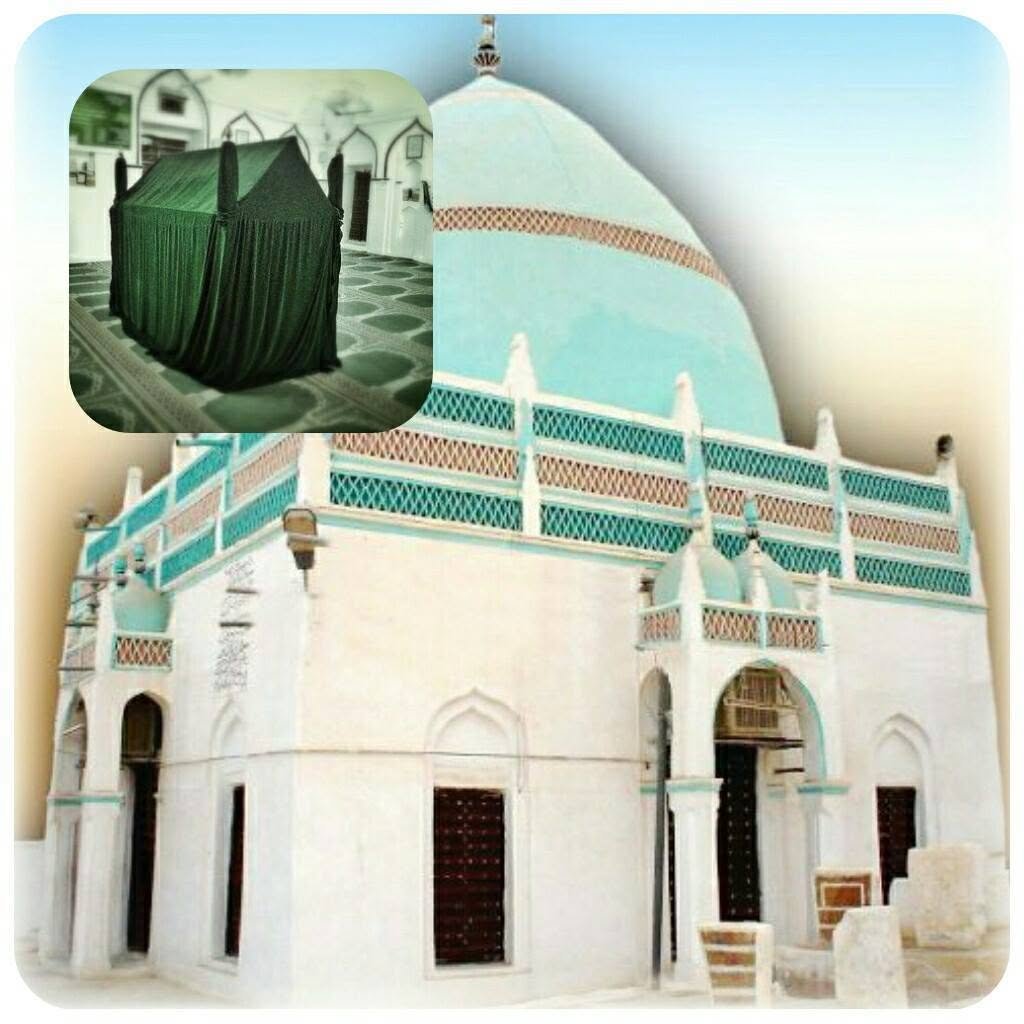
Ali bin Muhammad bin Hussein bin Abdullah al-Habshi
Scholar Born: 1843, Tarim District Died: 1915 Sayun
Ali bin Muhammad al-Habshi was a Hadrami scholar, jurist, and poet. He was born in the town of Qasm, in Tarim District, in 1843. He is considered one of the most prominent scholars of Hadramout in the nineteenth century. He was known for establishing the Seiyun scientific institute in 1296 AH and authoring the book “Samt al-Durar” on the Prophet’s biography, which circulated in a number of Islamic countries. He contributed to teaching Islamic sciences and preparing students of knowledge, and left behind books, poems, and scholarly letters. He died in Seiyun in 1915.
Biography
Birth and Upbringing
Ali bin Muhammad bin Hussein al-Habshi was born on Friday, the twenty-fourth of Shawwal in 1259 AH, corresponding to 1843, in the town of Qasm in Wadi Hadramout, within the current administrative boundaries of Tarim District.
He grew up in a family known for its interest in Islamic sciences. His father, Muhammad bin Hussein al-Habshi, was a scholar of Shafi'i jurisprudence and served as a mufti in Mecca.
His mother was Alawiya bint Hussein bin Ahmed al-Hadi al-Jifri, who played a fundamental role in his education and upbringing during his childhood.
He began memorizing the Holy Quran and learning the foundations of religious sciences in his birthplace, receiving his early education from his mother and a number of local scholars.
The scholarly environment in which he grew up shaped his early interest in jurisprudence, hadith, and the Arabic language.
Moving to Seiyun
In 1271 AH, he moved with his mother from the town of Qasm to Seiyun, one of the most prominent population and scholarly centers in Wadi Hadramout.
On the way, he passed through the area of Al Masilah near Tarim, where he met the scholar Abdullah bin Hussein bin Tahir and learned from him some of the foundations of Shafi'i jurisprudence.
After settling in Seiyun, he joined study circles and continued studying jurisprudence, hadith, Quranic exegesis, grammar, and other religious sciences.
This period marked the beginning of his close association with Seiyun, which later became the main center of his scholarly and educational activities.
Scholarly Journey to Mecca
Ali al-Habshi traveled to Mecca in 1276 AH, in response to his father's wish. His father was living in the Hijaz.
He stayed there for nearly two years, during which he studied Islamic sciences under his father and a number of scholars in Mecca.
The journey gave him the opportunity to learn about diverse scholarly approaches and connect with scholars and students from different parts of the Islamic world.
After his stay, he returned to Seiyun with a body of knowledge that helped strengthen his standing among the scholars of Hadramout.
The Beginning of His Teaching Activities
Ali al-Habshi began teaching in Seiyun, giving scholarly lessons at Hanbal Mosque on jurisprudence, hadith, Quranic exegesis, and religious instruction.
His study circles welcomed students of knowledge from the city and neighboring areas, and his activities expanded over the years.
He focused on teaching and explaining religious texts and connecting theoretical knowledge with education and conduct, which formed a fundamental part of his teaching approach.
Establishing the Seiyun Scientific Institute
In 1296 AH, corresponding approximately to 1879, Ali al-Habshi established the Seiyun scientific institute, which became one of the prominent centers for teaching Islamic sciences in Wadi Hadramout.
The institute was established in response to the need for an educational institution that would welcome students and provide them with a suitable environment for study and accommodation.
The institute welcomed students from areas across Hadramout and beyond, and helped educate a number of scholars and teachers who later moved to other areas.
The establishment of the institute is considered one of his most prominent achievements. It helped strengthen organized religious education in Seiyun and was among the early institutions that influenced the emergence of later scholarly institutes in Hadramout.
Establishing Riyadh Mosque
Ali al-Habshi's name was also associated with the establishment of Riyadh Mosque in Seiyun, which became one of the city's well-known religious landmarks.
The mosque served as a center for prayer, education, and preaching, and hosted scholarly gatherings and regular lessons in hadith and Islamic sciences.
Along with the Seiyun institute, the mosque helped expand the educational activities he supervised during his lifetime.
The mosque remained associated with his name after his death and became one of the historic sites connected to his life.
Writing and the Book “Samt al-Durar”
Ali al-Habshi was known for writing the book “Samt al-Durar fi Akhbar Mawlid Khayr al-Bashar” (The String of Pearls on the Account of the Birth of the Best of Mankind), a text on the Prophet's biography and attributes that is read at a number of religious gatherings.
The book is considered his best-known and most widely circulated work. It reached various parts of the Islamic world, particularly Southeast Asia and East Africa, through scholarly and social networks linked to Hadrami migrants.
He also left Arabic poems and literary texts addressing praise of the Prophet and religious and emotional themes.
A collection of his poems was compiled in a poetry anthology, along with his letters, sermons, and correspondence, some of which were preserved in manuscript and printed collections.
His Relationship with Social Life in Hadramout
Ali al-Habshi's activities were not limited to teaching and writing. He also participated in the social life of Seiyun through preaching and guidance gatherings and by receiving local residents and students of knowledge.
He used his scholarly standing to encourage the community to value education and social solidarity.
He also maintained scholarly relationships with a number of scholars in Hadramout and the Hijaz. These relationships helped circulate his works and spread his teaching approach beyond the region.
His Influence Beyond Hadramout
Ali al-Habshi's influence extended to areas outside Yemen, particularly Indonesia and countries in Southeast Asia, where his works spread among communities with historical ties to Hadramout.
The book “Samt al-Durar” was widely read in those communities, and his students and those affiliated with his scholarly school helped transmit some of his works and teachings.
This spread illustrates the cultural and scholarly influence of Hadramis beyond their homeland and the role of educational institutions in Wadi Hadramout in building cross-border scholarly ties.
Death and Scholarly Legacy
Ali bin Muhammad al-Habshi died in Seiyun on the twentieth of Rabi' al-Thani in 1333 AH, corresponding to 1915.
He was buried at Riyadh Mosque in Seiyun, which was associated with his scholarly and religious activities.
He left a legacy comprising the Seiyun institute, Riyadh Mosque, his poetic and religious works, and the generations who studied under him.
His name remains present in studies of the history of religious education in Hadramout and the spread of Hadrami scholarly heritage throughout the Islamic world.
Works
1. Establishing the Seiyun scientific institute in 1296 AH: Creating an educational institution to welcome students of Islamic sciences, which contributed to the development of education in Seiyun. 2. Establishing Riyadh Mosque: Creating a religious center associated with study circles, preaching, and education. 3. Writing “Samt al-Durar”: One of his best-known works, which circulated in Hadramout and other countries. 4. Teaching Islamic sciences: Giving lessons in Shafi'i jurisprudence, hadith, Quranic exegesis, and the Arabic language. 5. Preparing students of knowledge: Contributing to the education of generations of students who continued their scholarly activities within and beyond Hadramout. 6. Poetic output: Composing poems of praise and on religious and emotional themes. 7. Strengthening scholarly ties: Maintaining contact with scholars in Hadramout and the Hijaz and contributing to the exchange of works and knowledge between scholarly centers. 8. Contributing to social life: Participating in preaching, guidance, and educational initiatives in Seiyun.