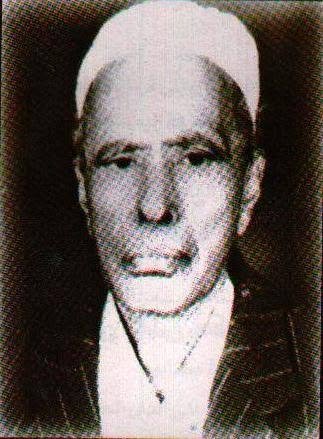
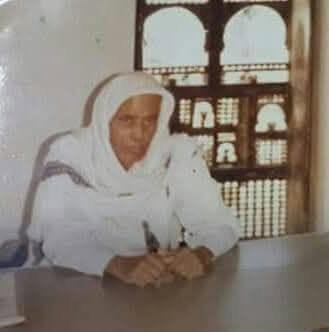
Abdulqadir Mohammed Al-Sabban
Historian Born: 1921, Seiyun – Hadramout Died: 13 January 1999 Sayun
Abdulqadir Mohammed Al-Sabban, a Hadrami historian, writer and journalist, was born in the city of Seiyun in 1921. He is considered one of the most prominent figures dedicated to documenting Hadramout’s history and its cultural and social heritage during the 20th century. He combined historical research, education, journalism and administrative work, contributed to the founding of cultural and educational institutions, and left dozens of books and manuscripts before his death in Seiyun in 1999.
Biography
Birth and upbringing
Abdulqadir Mohammed Al-Sabban was born in 1921 in the city of Seiyun in Wadi Hadramout, and grew up in a family with an interest in religious sciences and the Arabic language.
He began his education by memorizing the Holy Quran and learned the fundamentals of jurisprudence, Hadith, religious principles, grammar and morphology from his father, before enrolling at Al-Nahda Scientific School in Seiyun.
Education and scholarly formation
Al-Sabban continued his studies in Hadramout and moved to Ghayl Ba Wazir to pursue his education. He also acquired knowledge and learning during his time outside Yemen.
From his youth, he was interested in history and literature, and devoted much of his life to collecting information and documents related to the history of Hadramout, its cities and its notable figures.
Early career
He began working in 1937 as a clerk at the Sharia Judiciary Council in the city of Shibam, then moved to teaching in Mukalla in 1944.
During this period, he combined his professional work with cultural and journalistic activities, and helped establish a number of educational institutions and cultural clubs.
Journalistic and cultural work
Al-Sabban was among the pioneers of journalism in Hadramout. He contributed to the publication of the magazine “Flower of Youth” in 1942 and served as its editor-in-chief.
He also helped establish the Cultural Youth Club in Seiyun and worked to disseminate knowledge and promote literary activity among young people.
Administrative and social work
He chaired the municipal council in Seiyun in 1957 and contributed to educational and social initiatives, including support for schools and charitable projects.
After returning from abroad, he worked as a lawyer before turning more fully to historical research and heritage preservation.
His role in protecting Hadrami heritage
In 1979, he took charge of managing the branch of the General Authority for Antiquities, Museums and Manuscripts, and continued his work documenting historical and cultural heritage.
He took an interest in collecting information about cities, mosques, manuscripts and folk customs, and left books and studies that became an important resource for researchers of Hadramout’s history.
Death
Abdulqadir Mohammed Al-Sabban died on January 13, 1999, in Seiyun, at the age of 78.
He left a wide-ranging legacy of books, manuscripts, and historical and literary studies, in addition to his contributions to education, journalism and cultural work.
Works
1. Documenting Hadramout’s history He devoted much of his life to researching Hadramout’s history and collecting information about its cities, notable figures, and political and social events. 2. Founding the magazine Flower of Youth He helped establish the magazine in 1942 and served as its editor-in-chief as part of efforts to promote local journalism. 3. Helping establish the Youth Club in Seiyun In 1938, he helped establish the club, which represented one of the city’s cultural and social initiatives. 4. Contributing to the development of education He helped establish schools and educational initiatives in several parts of Hadramout and worked to expand access to learning. 5. Chairing the municipal council in Seiyun He chaired the municipal council in 1957 and took part in managing local affairs. 6. Working to protect antiquities and manuscripts He held responsibilities at the General Authority for Antiquities, Museums and Manuscripts and contributed to the preservation of historical heritage. 7. Writing on history, literature and heritage He left dozens of books and manuscripts on history, folk literature, social customs and jurisprudence. 8. Receiving cultural honors He received the Medal of Arts and Literature in 1988 and the Arab Historian Medal, as well as other honors in recognition of his scholarly contributions.
Photos