
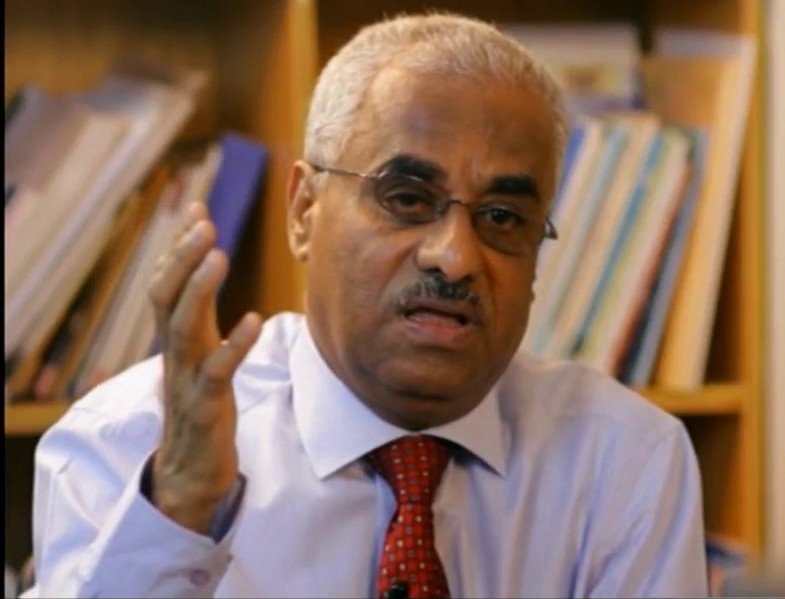
Saleh Ali Omar Basurah
Historian Born: 8 January 1952, Mukalla Died: 19 November 2018 Al Mukalla City
Saleh Ali Omar Basurah, a historian, academic and former Yemeni minister, was born in Mukalla, Hadramout Governorate, on January 8, 1952. He earned a doctorate in modern and contemporary history from the University of Leipzig in Germany, and advanced through university roles until he became president of the universities of Aden and Sana’a, then Minister of Higher Education and Scientific Research from 2006 to 2011. He contributed to historical studies related to Hadramout and Yemen, and took part in administrative and educational reform issues. He died in the Jordanian capital, Amman, in November 2018.
Biography
Birth and upbringing in Mukalla
Professor Dr. Saleh Ali Omar Basurah was born on Tuesday, January 8, 1952, in the Bar' al-Saddah neighborhood of Mukalla, Hadramout Governorate, now known as Al-Salam neighborhood.
His family originated in Wadi Daw'an, where his father was born before moving to Mukalla and settling there after years of working and traveling in African countries.
Basurah grew up in a middle-income social and commercial environment. From childhood, he helped his father with his commercial activities, which gave him early experience in dealing with people and taking responsibility.
He showed an interest in reading and culture, setting aside part of the money he received to buy books and magazines. This helped broaden his knowledge of Yemeni and Arab realities.
Primary and secondary education
Basurah received his primary, preparatory and secondary education at schools in Mukalla, during a period that witnessed political and social changes in Hadramout.
He took part in school, scouting and cultural activities, and showed an early interest in history and public affairs.
His school years coincided with the political events that preceded South Yemen’s independence from Britain in 1967, and he was influenced by the national and cultural climate of that period.
He completed secondary school in 1971, before moving to Aden to continue his university education.
University studies in Aden
He enrolled in the Faculty of Education at the University of Aden in 1972, choosing to study history and geography, the specialization that laid the foundation for his subsequent academic career.
During his studies, he took an interest in modern Yemeni and Arab history and continued to participate in student and cultural activities.
In 1976, he earned a bachelor’s degree in history and geography, then was appointed as a teaching assistant at the university, beginning an academic career that lasted several decades.
Graduate studies in Germany
Saleh Basurah moved to East Germany, as it was then known, to pursue graduate studies, enrolling at the University of Leipzig, one of Germany’s historic universities.
He learned German before beginning his specialized studies, then earned a master’s degree in modern and contemporary history in 1982 from the Department of African and Middle Eastern Studies.
He continued his studies at the same university until earning a doctorate in modern and contemporary history in 1986, with a particular interest in the history of Arab countries.
His studies in Germany enabled him to learn about modern historical research methods and benefit from approaches to analyzing documents and sources and comparing historical accounts.
Return to Yemen and academic career
Basurah returned to Yemen after earning his doctorate and resumed his academic work at the University of Aden.
He chaired the History Department at the Faculty of Education from approximately 1987 to 1993, taking part in the development of academic programs and overseeing teaching and scientific research.
He then became Dean of Scientific Research and Graduate Studies, where he worked to oversee graduate programs and develop research activities within the university.
He advanced through the academic ranks to become a professor and one of the most prominent scholars of modern and contemporary history at Yemeni universities.
President of the University of Aden
In 1995, Saleh Basurah became president of the University of Aden, after serving as the university’s vice president for academic affairs and acting president.
He remained president of the university until September 2003, a period that saw the expansion of a number of its educational programs and institutions.
He focused on strengthening graduate studies and scientific research, developing administrative and academic work, and expanding access to university education.
His presidency was also associated with the expansion of University of Aden faculties in some neighboring governorates, including Lahj, Abyan and Shabwa.
During that period, the university’s academic structure developed, alongside continuing challenges related to funding, infrastructure and accommodating student numbers.
President of Sana’a University
In September 2003, Basurah moved to the presidency of Sana’a University, remaining in the post until February 2006.
During this period, he managed one of Yemen’s largest university institutions and dealt with matters related to university admissions, scientific research and faculty affairs.
He focused on developing academic systems and regulations and strengthening the role of universities in scientific research and community service.
This experience added administrative expertise at two of Yemen’s most prominent universities to his career.
Appointment as Minister of Higher Education and Scientific Research
On February 11, 2006, Dr. Saleh Basurah was appointed Minister of Higher Education and Scientific Research in the Yemeni government.
He remained in office after the cabinet reshuffle issued on April 5, 2007, until December 2011.
His time in office coincided with the expansion of the university education sector and an increase in the number of public and private universities, along with challenges related to education quality, academic accreditation and scientific research.
He focused on regulating higher education, scholarships, developing university regulations and strengthening academic institutions.
He also took part in Arab and international conferences and meetings addressing university education and scientific research and ways to develop them.
Interest in the history of Hadramout
Hadramout held a prominent place in his research interests, as his birthplace and a region rich in historical events and transformations.
He conducted studies on the modern and contemporary history of Hadramout, political and social relations, the development of education and culture, and the roles of local figures and institutions.
Among his most prominent works is the book “Studies in the Modern and Contemporary History of Hadramout,” which addressed a range of historical issues and became a source used by researchers studying the governorate’s history.
He was also interested in documenting aspects of educational, cultural and social activity in Hadramout and relating them to the Yemeni and regional context.
His works are particularly significant because they combined the academic historian’s interest in documents and sources with his knowledge of Hadrami society and its development during the twentieth century.
Cultural and media activity
Alongside teaching and writing, Basurah took part in various cultural and media activities.
Published accounts by several of his colleagues say that during the 1970s he presented a television program on historical topics in a simplified style, aiming to bring historical knowledge closer to the public.
He also published studies and articles, took part in academic seminars and conferences, and contributed to public discussions related to education, history and development.
His activities combined academic research with participation in public cultural life.
Positions on public issues
Saleh Basurah became prominent in public life as an academic and government official, and took part in discussions of a number of political and social issues.
Among the most prominent issues associated with his name was the land issue in the southern governorates, where he and former official Abdulqader Ali Hilal took part in preparing a report addressing complaints of land seizure and related violations.
The report became known in the media as the “Basurah–Hilal Report” and was among the documents cited in discussions related to property and land after the 1994 war.
In his public statements, Basurah also expressed positions calling for political crises to be addressed through dialogue and institutional reforms, and criticized some forms of corruption and administrative deficiencies.
Activities in his later years
After completing his ministerial service, Basurah continued to participate in cultural and intellectual activities.
His name was associated with the Al-Rasheed Center for Enlightenment, Training and Studies, and he also took part in founding the Al-Rasheed Historical and Cultural Intellectual Forum.
During this period, he focused on issues related to Yemeni history, the future of education and community dialogue.
In 2018, he was selected to chair the Board of Trustees of Al-Arab University in Hadramout, drawing on his experience in university administration and higher education.
Illness and death
Saleh Basurah suffered from illness during the last period of his life and traveled to the Jordanian capital, Amman, for treatment.
He died on the evening of Monday, November 19, 2018, at a hospital in the Jordanian capital, aged 66.
His body was taken to Aden, where his funeral was held on Wednesday, November 21, 2018, attended by a number of officials, academics and social figures.
Basurah left a scientific and administrative legacy in his historical works, his students, and his contribution to developing the university institutions he led, as well as his involvement in education and public affairs.
Interest in his life and work continued after his death through seminars and academic events that examined his academic experience and contributions to the history of Yemen and Hadramout.
Works
1. President of the University of Aden (1995–2003): Oversaw academic administration and the expansion of a number of programs and faculties. 2. President of Sana’a University (2003–2006): Led the university and followed up on education and scientific research matters. 3. Minister of Higher Education (2006–2011): Worked to regulate the university education sector and develop its policies. 4. Research on Hadrami history: Produced academic studies addressing Hadramout’s history and its political, social and cultural transformations. 5. Teaching modern and contemporary history: Contributed to the education of students and researchers at Yemeni universities. 6. Development of graduate studies: Held responsibilities for scientific research and graduate studies at the University of Aden. 7. Contribution to the land report: Took part in preparing the “Basurah–Hilal Report” on land issues in the southern governorates. 8. Cultural and community work: Participated in seminars, intellectual forums and activities aimed at disseminating historical knowledge.