
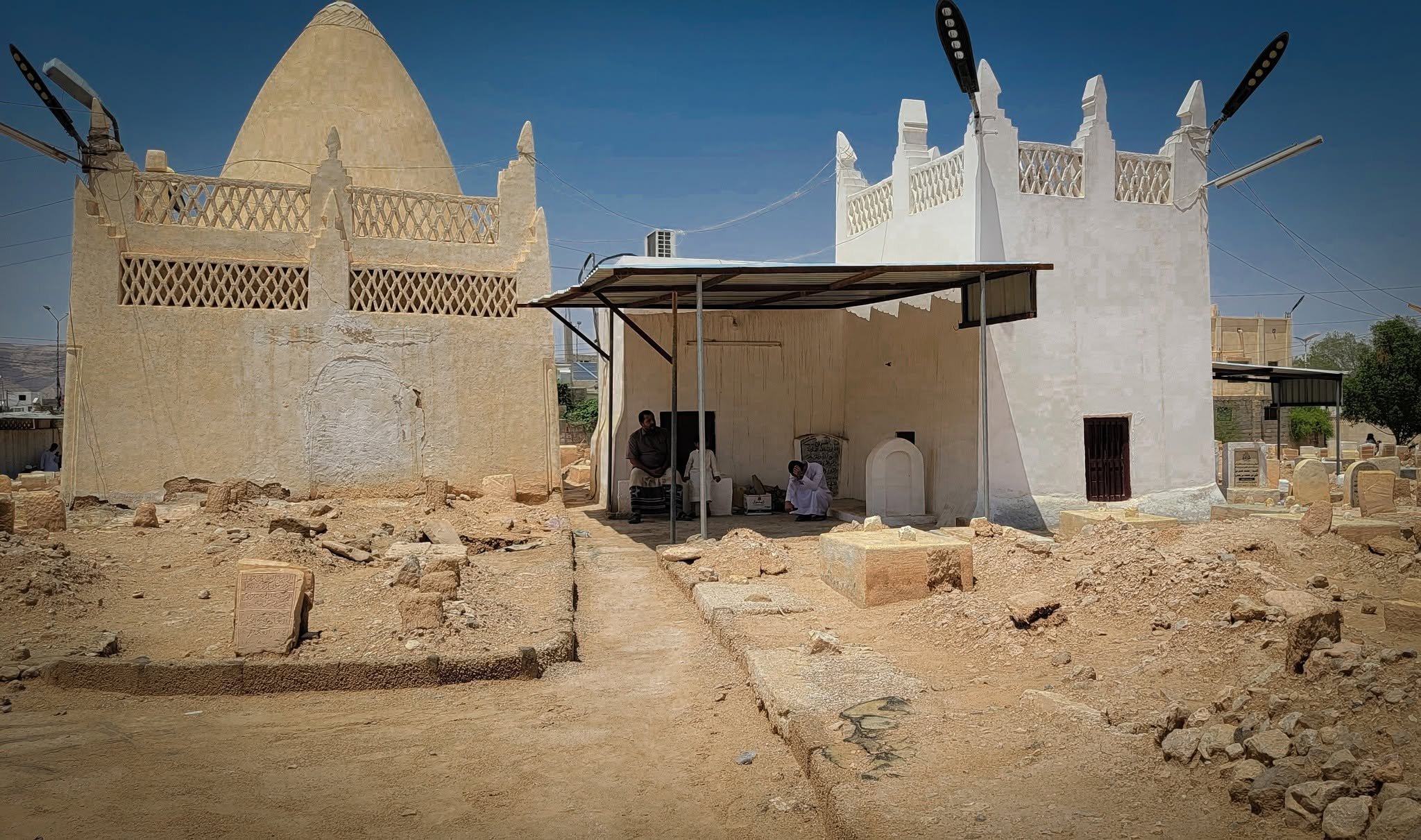
Al-Allamah Abdullah bin Umar Bamakhurma
Jurist Born: 1501, Al-Shihr – Hadramout Died: 1565 Ash Shihr
Abdullah bin Umar Bamakhurma was a Hadrami scholar, jurist and judge, born in the city of Al-Shihr in 1501 AD. He is considered one of Yemen’s most prominent scholars of the 16th century AD. He was known for his deep knowledge of Shafi'i jurisprudence, astronomy and arithmetic. He served as a judge in Al-Shihr and left scholarly and jurisprudential works that enriched Hadrami scholarly heritage.
Biography
Birth and Early Life
Al-Allamah Abdullah bin Umar bin Abdullah bin Ahmad Bamakhurma was born in the city of Al-Shihr on the coast of Hadramout, on 10 Jumada al-Akhirah 907 AH, corresponding to 1501 AD.
He grew up in a scholarly family known for jurisprudence, the judiciary and literature. His father, Sheikh Umar bin Abdullah Bamakhurma, was one of Hadramout’s scholars and poets, while his uncle, al-Tayyib bin Abdullah Bamakhurma, was a historian, jurist and judge.
Education and Scholarly Formation
He began his education at an early age and memorized the Holy Quran when he was seven. He then studied religious and linguistic sciences under his father and uncle, as well as a number of scholars in Al-Shihr.
He continued his scholarly travels to Zabid, Aden, Taiz and the Two Holy Mosques, where he studied under scholars of his time and deepened his knowledge of Shafi'i jurisprudence and its principles, inheritance law, astronomy and arithmetic.
Scholarly and Judicial Career
Bamakhurma distinguished himself in religious sciences and was known for his ability to conduct jurisprudential research and discuss scholarly questions.
In 943 AH, he became judge of the city of Al-Shihr during the reign of Sultan Kathiri Badr Abu Tuwayriq, before later leaving the position.
He also served as an adviser to the sultan on some political and administrative matters, contributing to the drafting of correspondence and offering his views on issues brought before him.
Scholarly Travels
He traveled between a number of Yemeni cities, visited the Two Holy Mosques and met prominent scholars and jurists of his time.
These travels helped broaden his scholarly knowledge and gave him the opportunity to exchange views on jurisprudential and astronomical questions.
Settling in Aden
At a later stage, he moved to the city of Aden, where he continued teaching, issuing fatwas and writing, and became a respected scholar among the city’s jurists.
He spent his final years in Aden, where he died in 972 AH, corresponding to 1564 or 1565 AD, depending on the method used to convert the Hijri date.
Works
1. Serving as Judge in the City of Al-Shihr He became judge of Al-Shihr in 943 AH and took part in adjudicating disputes and religious cases during the reign of Sultan Badr Abu Tuwayriq. 2. Writing on Shafi'i Jurisprudence He wrote jurisprudential commentaries and annotations addressing matters of worship, transactions and judicial rulings. 3. Contributions to the Science of Inheritance He wrote a commentary on the Rahbiyyah poem on inheritance law, a field in which he excelled. 4. Interest in Astronomy and Prayer Times He wrote scholarly treatises on calculating times, determining the direction of the qibla and certain astronomical questions related to acts of worship. 5. Writing on Arithmetic and Surveying Some of his treatises addressed arithmetic, algebra and surveying, and their applications in transactions and measurements. 6. Participation in Political and Administrative Affairs He served as an adviser to Sultan Badr Abu Tuwayriq and contributed to certain administrative duties and official correspondence. 7. Teaching and Issuing Fatwas He taught and issued fatwas in a number of Yemeni cities, particularly Al-Shihr and Aden. 8. Contribution to Hadrami Scholarly Heritage He left works and manuscripts on jurisprudence, astronomy, arithmetic and biographical writing, which became part of Yemen’s scholarly heritage.