
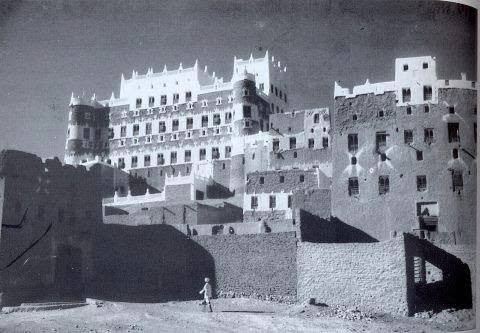
Sultan Badr bin Abdullah Al Kathiri (Abu Tuwairiq)
Sultan Born: 1496, Hadramout Died: 1569 Sayun
Sultan Badr bin Abdullah Al Kathiri, known by the title “Abu Tuwairiq,” was one of the most prominent rulers of the Kathiri Sultanate in Hadramout during the 16th century AD. He assumed power during a period of political and military conflicts and worked to expand his state’s influence and unite wide areas of Hadramout under his authority, becoming one of its sultans most frequently mentioned in historical sources.
Biography
Birth and Early Life
Sultan Badr bin Abdullah bin Ja'far Al Kathiri, known as Abu Tuwairiq, was born in 902 AH, corresponding to around 1496 AD, in Hadramout. Historical sources differ on his birthplace, citing either Seiyun or Shibam.
He grew up in the ruling Kathiri family and entered political life at an early age, during a period when local and tribal powers were competing for influence and control in Hadramout.
Assumption of Power
Badr Abu Tuwairiq came to prominence in the early years of the 16th century AD and took part in administering the sultanate alongside his brother, Muhammad bin Abdullah Al Kathiri, before becoming the state’s leading ruler.
One historical study places his reign between 927 and 975 AH, corresponding to around 1520 and 1567 AD, although historians differ over the beginning and end of his rule.
Expansion of the Kathiri State’s Influence
Sultan Badr led military and political campaigns to expand the Kathiri State’s influence and succeeded in bringing wide areas of Wadi Hadramout and its coast under his control.
During his reign, the sultanate’s influence extended to eastern and western areas beyond the traditional centers of Kathiri rule, although the boundaries of its actual control varied according to the historical period and sources.
This expansion was accompanied by military conflict with local and tribal powers that opposed his authority.
Relations with the Ottoman Empire
Badr Abu Tuwairiq established relations with the Ottoman Empire during the reign of Sultan Suleiman the Magnificent and sought the assistance of Ottoman troops and military expertise to strengthen his capabilities.
These relations played a role in military confrontations within Hadramout and in responding to the Portuguese threats faced by the region’s coastline during the 16th century.
Confronting Portuguese Raids
During his reign, the coast of Hadramout was subjected to Portuguese naval attacks, particularly on the city of Al-Shihr.
Sultan Badr worked to strengthen military defenses and protect coastal areas, drawing on local forces and incoming military personnel.
Administration and Economy
He focused on organizing administration and finance in the areas under his rule. Historical studies indicate that he issued local silver and copper coins, including the rial and the baqsha.
His reign was also associated with the organization of some judicial and educational institutions, most notably the Badria School in the city of Al-Shihr.
End of His Reign
The final years of his reign saw disputes within the Kathiri family, which ended with his son Abdullah bin Badr deposing and detaining him in 976 AH, corresponding to 1568 AD.
Sultan Badr Abu Tuwairiq died in 977 AH, corresponding to around 1569 AD, after a reign spanning decades and marked by a major expansion of the Kathiri State’s influence.
Works
1. Expanding the Kathiri State’s Influence He led military and political campaigns that enabled the Kathiri State to extend its influence over wide areas of Hadramout, and the sultanate became one of the region’s most prominent political powers during his reign. 2. Uniting Areas of Hadramout He worked to bring multiple centers and tribes under a single political authority, though this was achieved through wars, alliances, and agreements with varying outcomes. 3. Confronting Portuguese Expansion He took part in repelling Portuguese raids on the coast of Hadramout and worked to strengthen the state’s military power. 4. Establishing Relations with the Ottomans He established political and military contacts with the Ottoman Empire and benefited from military support in his regional conflicts. 5. Issuing Local Currency Silver and copper coins, including the rial and the baqsha, were minted during his reign as part of efforts to organize economic transactions. 6. Founding the Badria School in Al-Shihr His name was associated with the establishment of a school in the city of Al-Shihr, which contributed to the education of a number of people engaged in Islamic sciences and the judiciary. 7. Organizing Administration and the Judiciary He focused on appointing judges and organizing some administrative and financial affairs in the areas under his rule. 8. Strengthening the Standing of the Kathiri State During his reign, the sultanate underwent a period of political and military expansion, before disputes within the ruling family weakened it in subsequent years.