
Trade caravans in Hadramout... the story of ancient routes between the coast, the valley and the desert
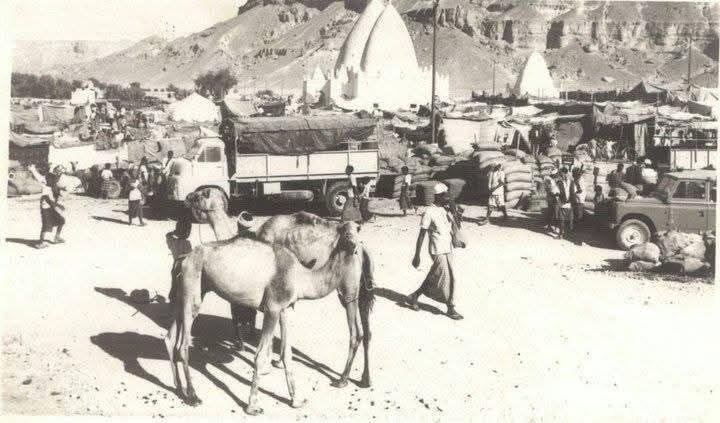
For centuries, trade caravans formed an economic lifeline linking Hadramout’s coastal cities with the villages of the valley and inland markets, and their routes extended to areas of the Arabian Peninsula. Camels were a principal means of transporting goods and travelers across mountains and deserts. This movement helped markets prosper, products circulate and social ties strengthen, before gradually declining with the spread of cars and the construction of modern roads.
- Date
- Not specified
- Place
- Not specified
Historical background
Hadramout’s geographical location made it a link between the Arabian Sea and the inland regions of the southern Arabian Peninsula, with trade routes extending from coastal ports to Wadi Hadramout, the plateaus and the surrounding deserts.
Since ancient times, the region has been associated with the trade in frankincense, myrrh and aromatic products, which formed an important part of commercial exchanges between the southern Arabian Peninsula and other parts of the ancient world.
In later eras, caravan traffic continued to serve local and regional trade, transporting agricultural and animal products and imported goods through the ports.
Before cars became widespread, merchants and travelers relied on camels, donkeys and mules, depending on the nature of the route and the load. Journeys required detailed knowledge of the paths through valleys and highlands, as well as the locations of wells and stopping places.
Details
Ancient Hadramout... a center on the frankincense route
The ancient Kingdom of Hadramout had extensive commercial activity during the first millennium BCE and the early centuries CE, with frankincense and myrrh among the most prominent goods that contributed to the prosperity of its trade.
The ancient city of Shabwa, located within the present-day governorate of Shabwa, was one of the most important commercial centers of the ancient Hadrami Kingdom. Caravans arrived there carrying goods from production areas and ports.
From Shabwa, goods were transported to the markets of neighboring kingdoms or taken along long overland routes toward the north of the Arabian Peninsula.
Archaeological studies indicate that ancient authorities took an interest in preparing mountain passes, establishing caravan stations and facilities for storing goods and collecting trade fees.
Qana Port... a meeting point for maritime and overland trade
The ancient port of Qana, near Bir Ali in the present-day governorate of Shabwa, was one of the most prominent maritime outlets of the Kingdom of Hadramout.
The port received goods arriving by sea, as well as frankincense and myrrh products brought from inland areas and eastern production regions.
During the early centuries CE, the port flourished as a station for collecting, storing and redistributing goods.
Caravans transported goods between Qana and Shabwa along routes that passed through Wadi Hajar and the plateau areas, linking maritime trade with the kingdom’s inland centers.
Archaeological excavations have uncovered structures and warehouses at the site of Qana, reflecting the importance of the commercial activity in the region.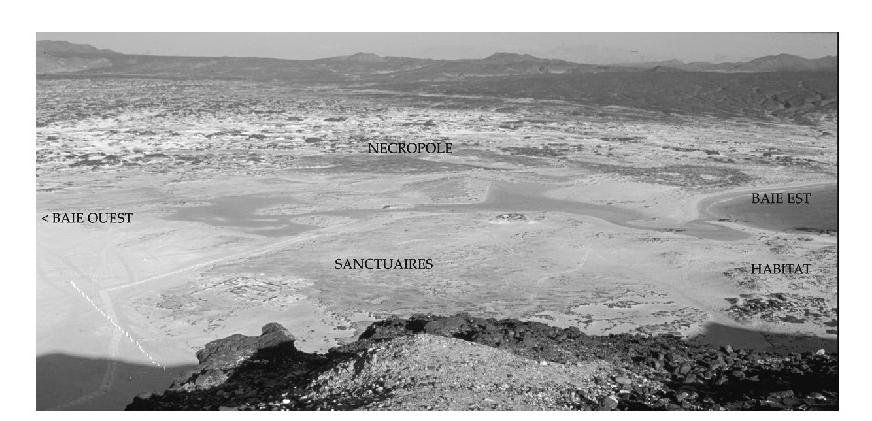
From Dhofar to Wadi Hadramout... routes across the desert
The ancient caravan network extended eastward toward Dhofar, in present-day Oman, where the region was known for producing frankincense.
Studies indicate that some routes passed through Habroot and Thamud, then headed to Wadi Hadramout from the direction of As Sawm, before continuing west through the areas of Tarim, Shibam and Haridah.
Other routes linked Dhofar with coastal ports, including Sumhuram, Sayhut and Qana.
These routes were not always fixed; they changed according to security conditions, the availability of water and the development of ports and markets.
The “Land of Frankincense” site, inscribed on the UNESCO World Heritage List, underscores the importance of oases, desert stations and ports in organizing the frankincense trade across the southern Arabian Peninsula.
Routes between the coast and the valley... trade in everyday life
Caravan traffic was not limited to ancient international trade; it remained an important means of exchanging goods between the coast of Hadramout and its valley during the Islamic eras and later periods.
Coastal ports, especially Al-Shihr and then Mukalla, received goods carried by ships, before they were distributed to inland markets.
In turn, agricultural products and local goods were transported from the valley to the coast, where they were sold or shipped to other destinations.
Exchanges included grains, dates, fabrics, foodstuffs and other goods, with the types and quantities of goods varying from one period to another.
The routes connecting the coast and the valley became part of a broader economic network, linking farmers, merchants and port operators with local and foreign markets.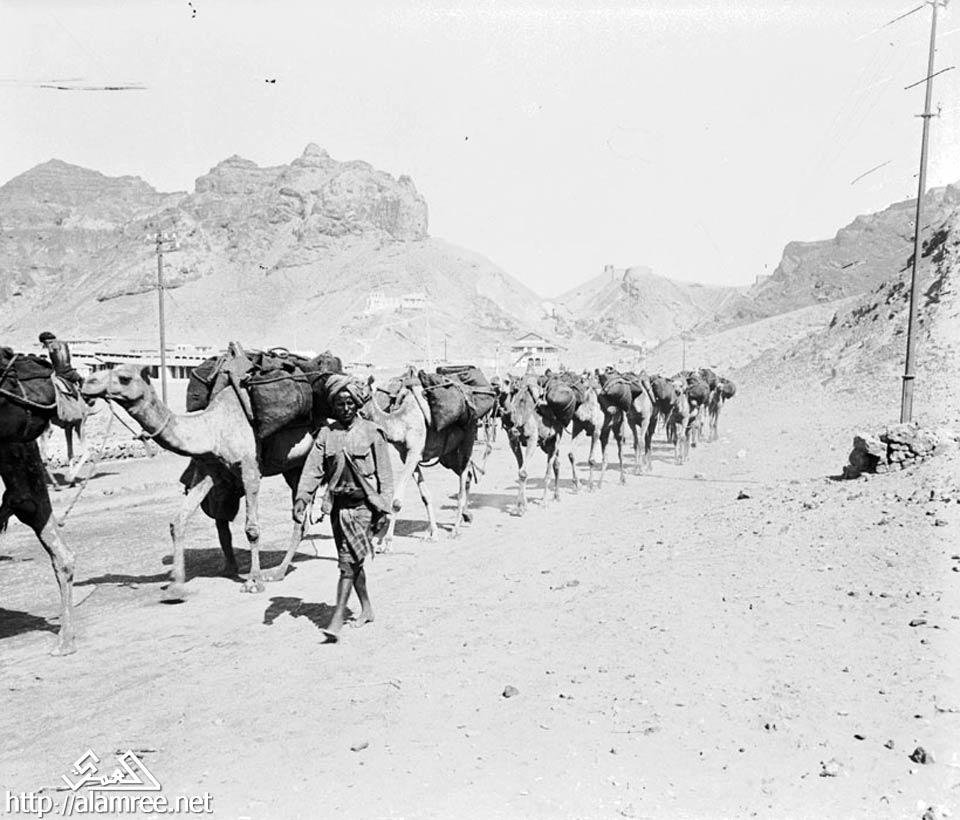
Life on a caravan... a journey governed by nature and security
Caravans relied on camels because of their ability to withstand thirst and carry loads in desert environments, while other pack animals were used on shorter or more rugged routes.
Journeys required guides who knew the routes, the locations of wells and the highlands. The choice of travel time was also linked to the heat, the availability of water and the condition of the roads.
Rest stops and populated settlements were important places to obtain water and food, exchange news and conduct commercial transactions.
Road security was a decisive factor; local conflicts or political unrest could disrupt the usual route and compel caravans to choose alternative routes.
A study specializing in ancient Hadramout routes indicates that there were service facilities, lookout sites and prepared passages, reflecting the considerable effort required to protect the flow of trade.
Caravans and markets... more than just transporting goods
Caravan traffic helped stimulate the markets along its routes, where products were exchanged, deals made and fees collected.
Their role was not limited to the economy: travelers also carried news, knowledge and customs, and helped expand social ties between the inhabitants of the coast, the valley and the desert regions.
Some stations became active commercial centers because of their location on the routes, while others declined in importance when trade routes changed or activity shifted to new ports and markets.
The 20th century... caravans decline in the face of modern transport
With the introduction and gradual spread of cars during the 20th century, traditional means of transport began to lose some of their commercial importance.
The development of roads helped reduce journey times and increase the quantities of goods transported, whereas caravans had taken many days to cross some distances.
The transition did not take place at the same time in all parts of Hadramout, as camels and other pack animals continued to be used on some remote routes that had not been reached by paved roads.
As the modern transport network expanded, trade caravans gradually declined, and their old routes remained part of the region’s geographical and economic heritage.
Historical impact
Trade caravans left a profound mark on Hadramout’s history, helping connect its distant areas, facilitate the exchange of products and expand economic relations with neighboring regions.
They also contributed to the prosperity of ancient commercial centers, foremost among them Shabwa and Qana during the era of the Hadrami Kingdom, followed by the markets of the coast and the valley in later historical periods.
Caravan routes helped knowledge, news and customs pass between communities, in addition to their role in transporting goods and travelers.
Today, these routes are of archaeological and historical importance because they reveal the population’s ability to adapt to the desert and mountainous environment and document an aspect of economic life before the emergence of modern transport.