Education in Hadramout: From Quranic Schools and Scientific Centers to Modern Formal Schools
Hadramout witnessed an educational renaissance that extended from Quranic schools, mosque study circles and scientific centers to the establishment of modern formal schools during the twentieth century. Scholars, reformers, civil society associations and local authorities contributed to the development of education. Leading institutions emerged in Tarim, Seiyun, Ghayl Ba Wazir and Mukalla, graduating generations of teachers, intellectuals and administrators who left their mark in Hadramout, Yemen and beyond.
- Date
- 1933
- Place
- Not specified
- Ago
- 93 years ago
Historical background
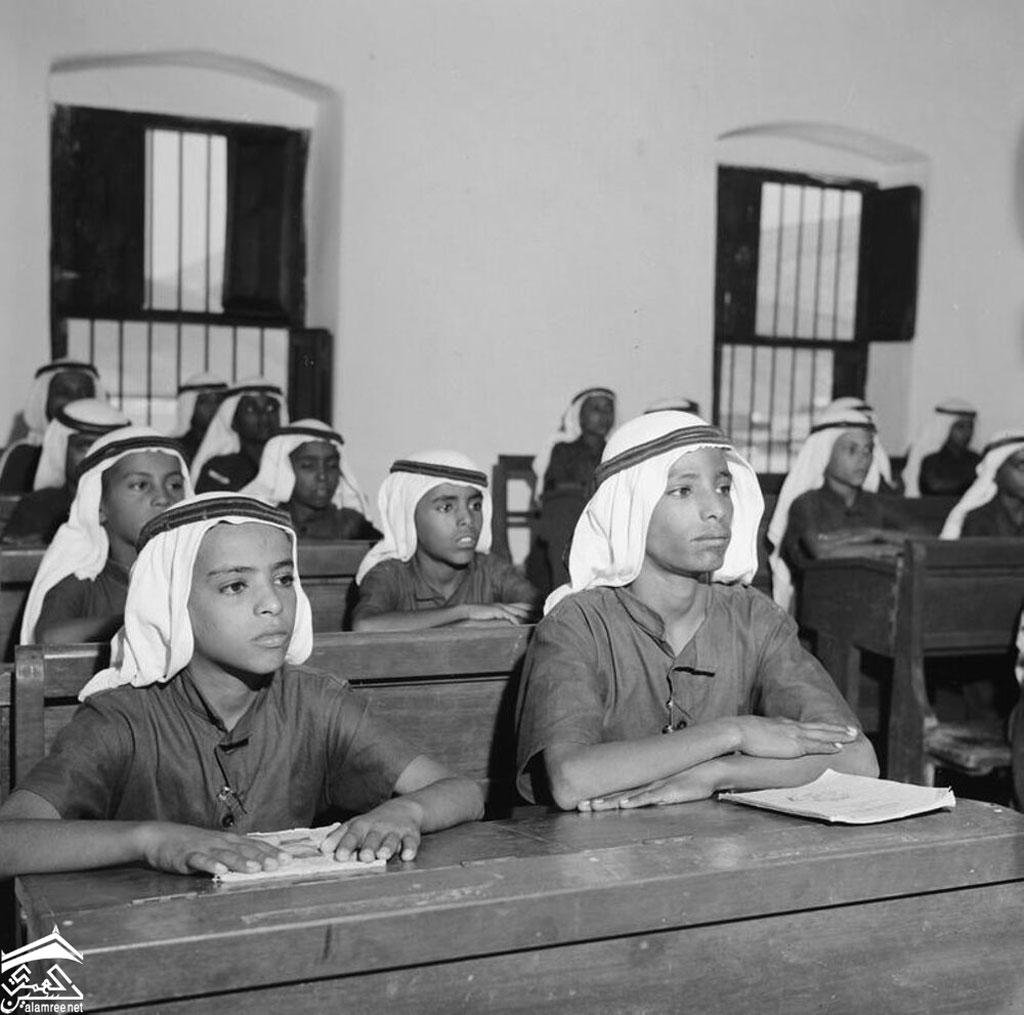
For centuries, education in Hadramout has been linked to mosques and Quranic schools known locally as “ma'allamat,” where children learned to read and memorize the Holy Quran, along with the basics of reading, writing and religious sciences.
Over time, religious educational institutions developed, and cities such as Tarim and Seiyun emerged as centers of learning, receiving students from Hadramout and other countries with which they were connected through migration and trade.
In the late nineteenth and early twentieth centuries, the need began to emerge to expand education to include modern sciences, languages and arithmetic, and to prepare administrative personnel, alongside the economic and social changes taking place in Hadramout.
These circumstances paved the way for the emergence of formal schools, which used grade levels, curricula and examinations, while traditional education continued in mosques and scientific centers.
Details
Quranic Schools and Ma'allamat: The Early Beginnings of Education
Quranic schools and ma'allamat formed the foundation of education in Hadramout before the spread of modern schools. Teachers taught children the Holy Quran, reading and writing, either in mosques or in places designated for that purpose.
Education was not confined to major cities; these institutions spread through villages and population centers, helping disseminate religious and linguistic knowledge among successive generations.
After completing the initial stages of education, students moved on to scholars’ study circles and scientific centers to continue studying jurisprudence, Hadith, Arabic and other sciences.
Scientific Centers: Hadramout as a Destination for Students of Knowledge
During the nineteenth century, Hadramout saw notable development in its religious educational institutions, foremost among them the Tarim center, which opened on October 2, 1887, following efforts that began in 1886 to establish an institution that would receive students from within and outside Hadramout.
The center contributed to the teaching of Islamic and Arabic sciences and attracted students from various regions, including children of Hadrami communities abroad.
Seiyun also had educational institutions and centers that helped prepare scholars and teachers, while this activity extended to Ghayl Ba Wazir and other areas of Hadramout.
These institutions played an important role in the development of education, combining the preservation of the scholarly heritage with the provision of a more structured learning environment.
Tarim, 1932–1933: The Beginning of Modern Formal Education in the Valley
In the early 1930s, the city of Tarim underwent an important transformation with the establishment of the Al-Ikhwan wa Al-Mu'awanah Association School, considered one of the first modern formal schools in Wadi Hadramout.
An academic study published by Al-Mahrah University indicates that the school was established in 1352 AH, corresponding approximately to 1932–1933 AD, at a time when modern education faced social reservations among some residents.
The school adopted an educational structure different from that of traditional ma'allamat, and the association’s activities later included the education of boys and girls and teacher training.
A girls’ school opened in 1938, followed by the establishment of the association’s intermediate school in 1940, providing an education that qualified students to continue their studies at higher educational institutions inside and outside the region.
These initiatives marked a qualitative leap in the history of education in Wadi Hadramout, particularly as the range of subjects expanded and greater attention was given to preparing teachers.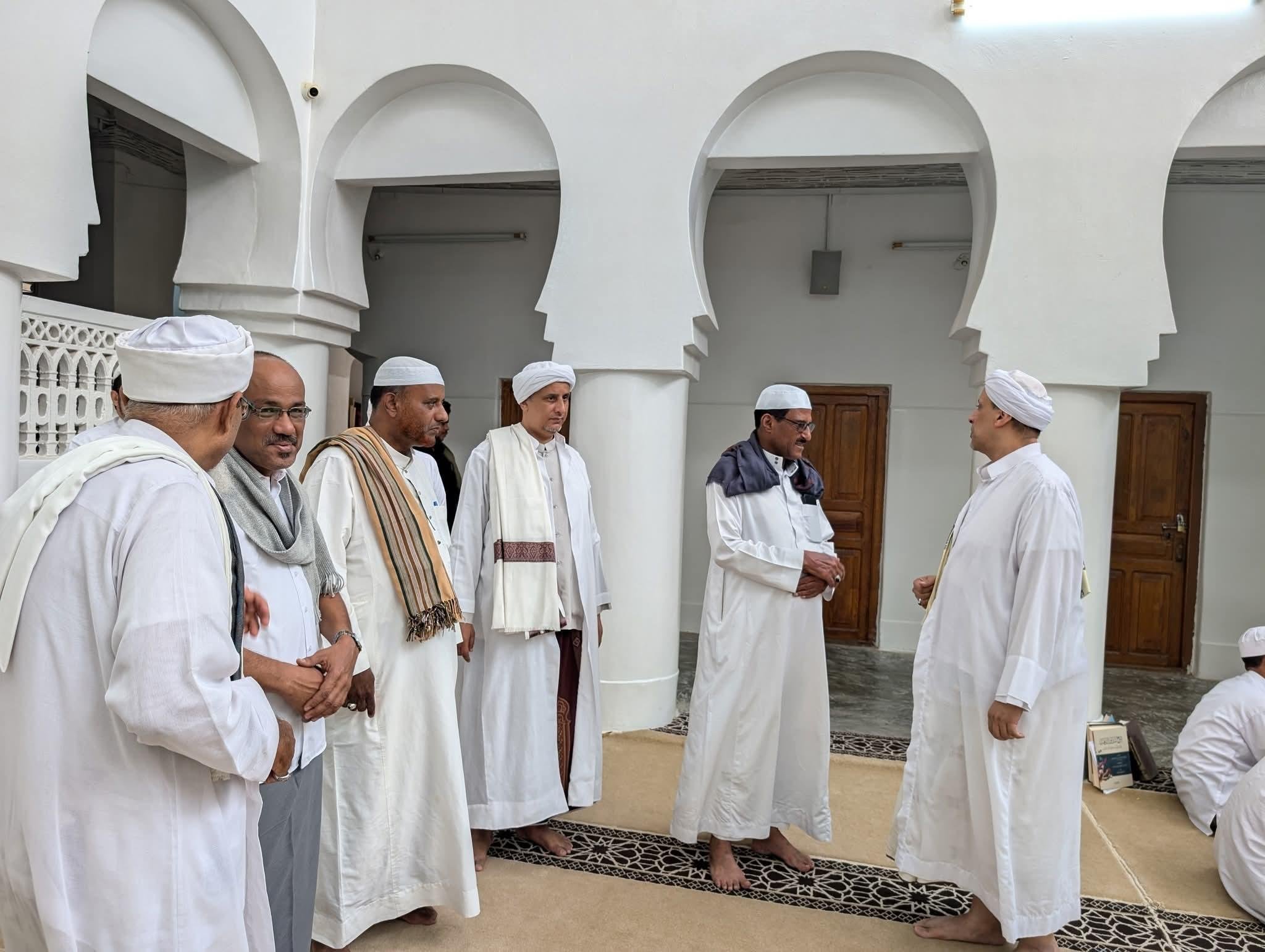
Ghayl Ba Wazir Intermediate School: An Educational Landmark That Shaped Generations
The intermediate school in the city of Ghayl Ba Wazir was one of the most prominent educational institutions in the history of modern Hadramout.
The intermediate education program associated with it began in the early 1940s, before the school moved from Mukalla to Ghayl Ba Wazir in May 1944, where it was housed in the Al-Azhar Fortress building.
The school adopted a structured educational system, with a boarding section for students from various regions, and drew on the Sudanese educational experience, particularly the curricula and methods of the Bakht al-Ruda Institute.
Studies included Arabic, English, mathematics and science, as well as cultural and sports activities.
Generations graduated from the school, with some going on to hold positions in education, administration, politics and culture. Among its most prominent graduates were historian Mohammed Abdulqader Ba Faqih and former Prime Minister Faraj bin Ghanem.
The intermediate school became a symbol of Hadramout’s educational renaissance, and its historic building remained a testament to an important period in the history of education.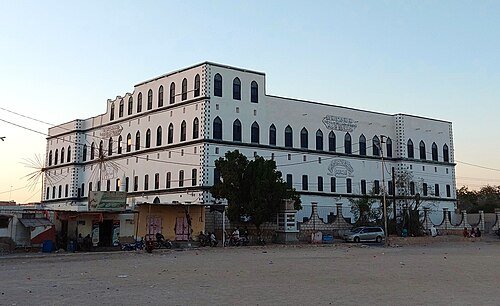
Seiyun: Expansion of Education in the Kathiri Sultanate
During the second half of the twentieth century, formal education expanded in Seiyun, where the intermediate school emerged as an institution receiving students from areas of Wadi Hadramout and some areas under the Qu'aiti Sultanate.
Historical documents indicate that the school began with forty students, including ten from Qu'aiti areas and thirty from Seiyun, Tarim, Sah and Hawtat Ahmed bin Zain.
The course of study followed a four-year system. Hadrami and Sudanese teachers took part in instruction, and the school contributed to preparing educational and administrative personnel during the final years of sultanic rule.
Mukalla: From Primary Schools to Secondary Education
During the Qu'aiti era, educational institutions developed gradually in Mukalla City, with the spread of primary schools and a growing need for higher levels of study.
In 1962, Mukalla Secondary School emerged as one of the first secondary educational institutions in Hadramout. It marked an important step that enabled students to continue their studies without having to travel outside the governorate during the initial stages of secondary education.
This development helped prepare local personnel to pursue higher education and take part in government and educational institutions.
After 1967: Expansion of Government Education
After the end of sultanic rule and the establishment of the State of South Yemen in 1967, education in Hadramout entered a new phase linked to the expansion of the state’s role in managing schools, developing curricula and training teachers.
In the following decades, government schools spread more widely in cities and villages, opportunities for girls’ education expanded, and institutions for technical, teacher-training and higher education were established.
Over the years, education became one of the sectors that most contributed to social and cultural change in Hadramout, building on an earlier scholarly heritage and modern educational experiences.
Historical impact
The transition from Quranic schools and scientific centers to formal schools marked an important transformation in Hadrami society, helping broaden fields of knowledge and prepare teachers, employees and specialized personnel.
Modern schools also helped expand educational opportunities among different segments of society and enabled students to continue their studies at educational institutions in Yemen and abroad.
The impact of this renaissance was evident in the graduates who went on to assume leadership, scholarly and cultural roles, while historic institutions such as the Tarim center and the intermediate school in Ghayl Ba Wazir remain witnesses to stages in the development of education.
The history of education in Hadramout reflects the interaction between traditional scholarly institutions, civil society reform initiatives and government education. This is a heritage worthy of preservation and documentation for future generations.