The Historic City of Al-Hajrain
The historic city of Al-Hajrain is one of the most prominent ancient urban centers in Hadramout Governorate. It lies at the entrance to Wadi Daw'an, atop a rocky rise that gives it a distinctive view of the surrounding valleys and farms. The city is renowned for its closely clustered mud-brick and stone houses, traditional alleyways, and terraced urban layout, which reflect the ingenuity of the Hadrami people in adapting to the mountainous landscape. Al-Hajrain has been linked to Hadramout's social, scientific, and commercial history and has remained over the centuries a model of the traditional Hadrami city, combining historical value, architectural beauty, and an authentic cultural identity.
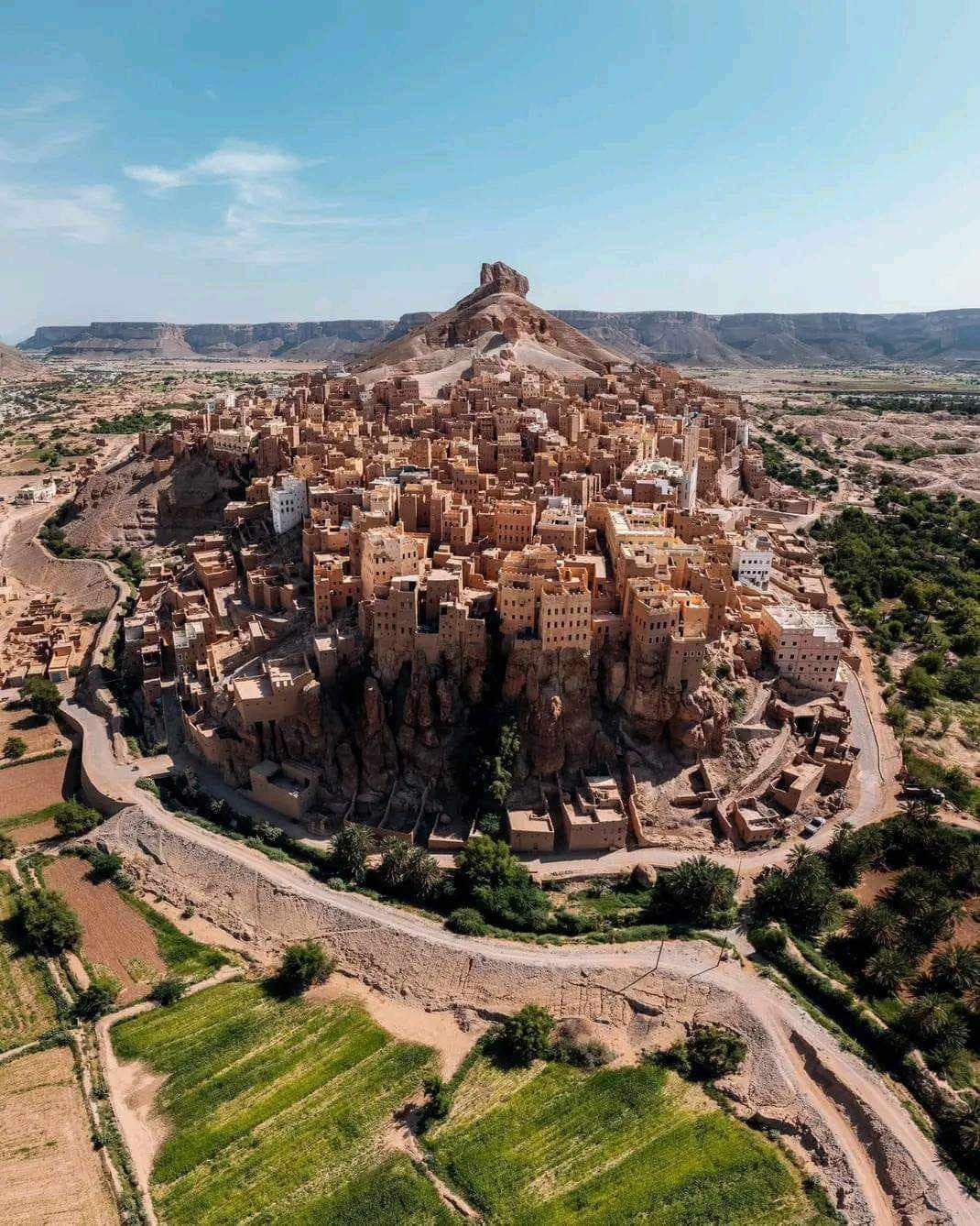
Al-Hajrain.. A Historic Urban Center Embracing the Mountains of Wadi Daw'an
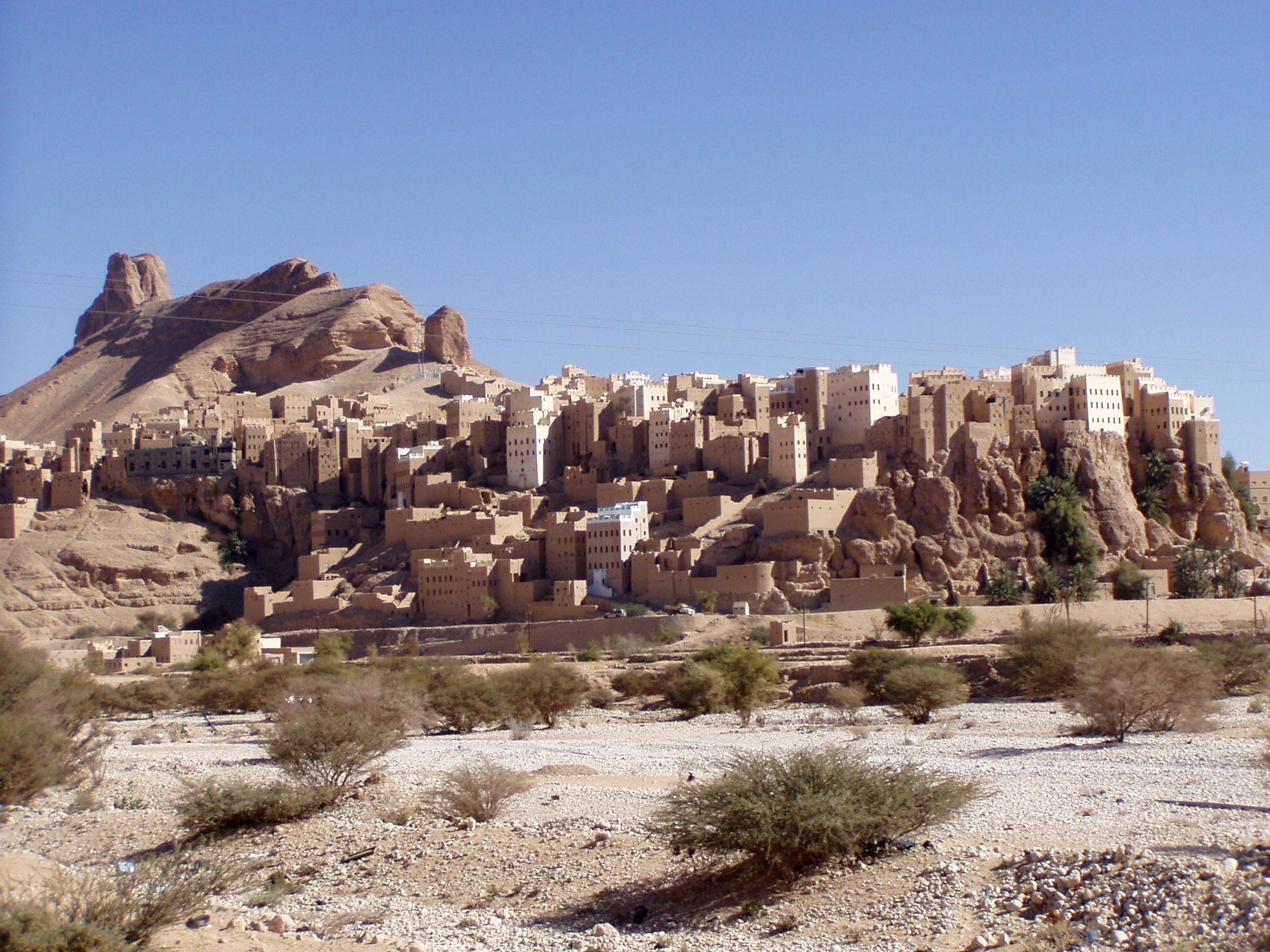
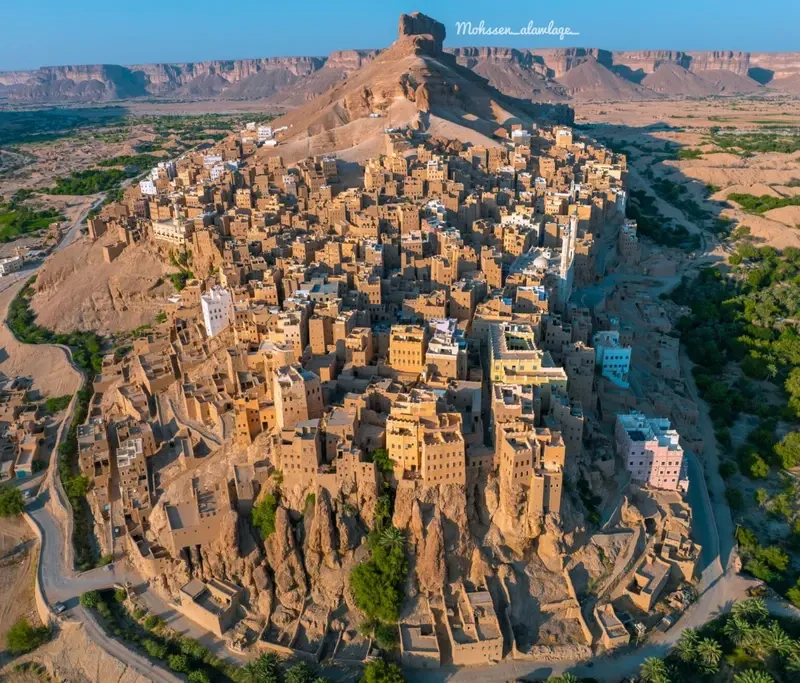
At the meeting point of valleys and mountain highlands in Hadramout, the historic city of Al-Hajrain sits atop a towering rocky outcrop. Its exceptional urban landscape brings together the beauty of nature and the depth of history, and reflects the Hadrami people's ability to build integrated residential settlements in challenging geographical locations.
Al-Hajrain is one of the most prominent historic cities in Wadi Daw'an, distinguished by its strategic location, terraced traditional architecture, and cultural heritage linked to the history of settlement, trade, and social life in Hadramout.
Geographical Location and Surrounding Landscape
The city of Al-Hajrain is located in Daw'an District in Hadramout Governorate, where several valleys and tributaries meet to form the natural entrance to parts of Wadi Daw'an.
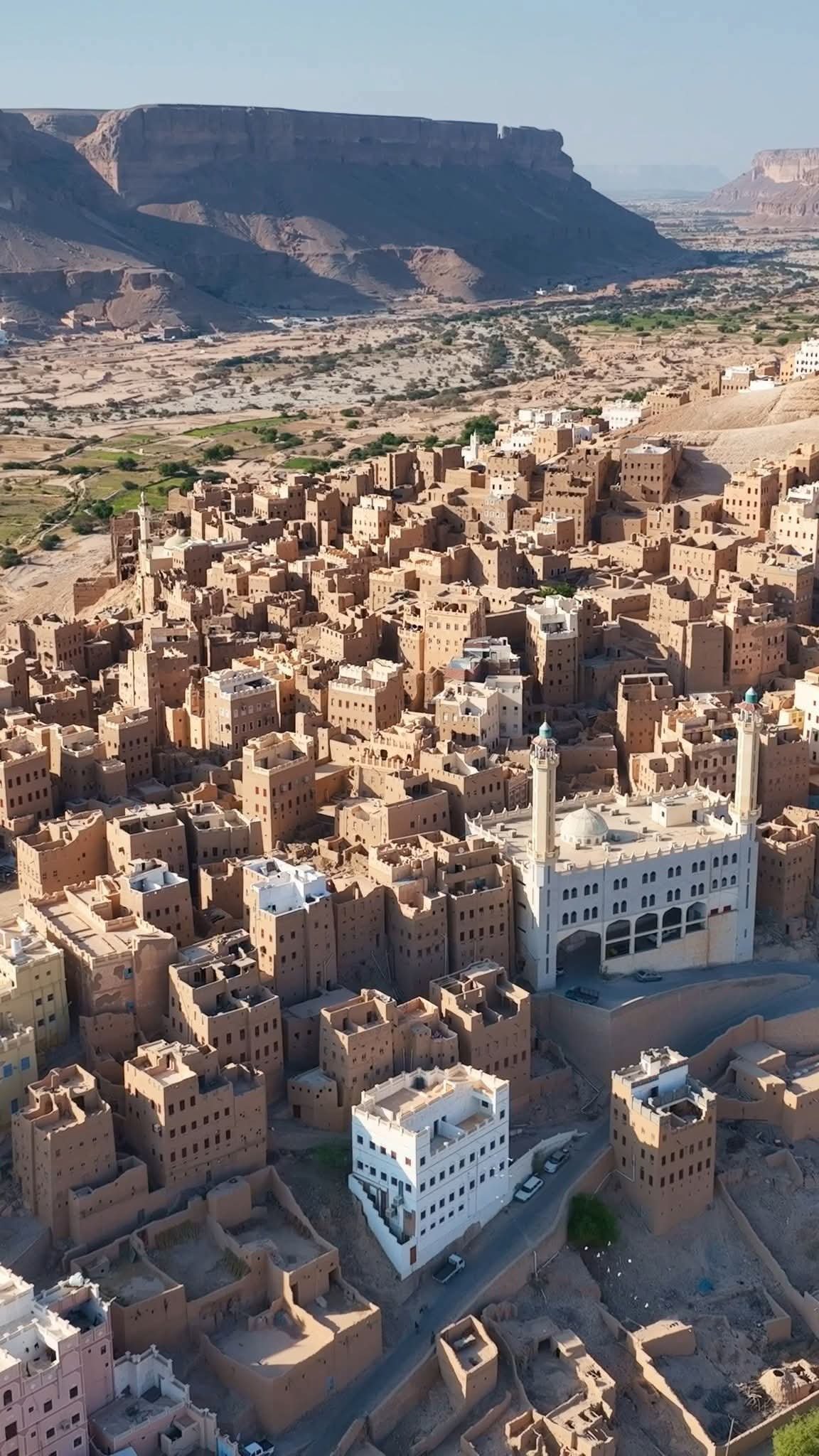
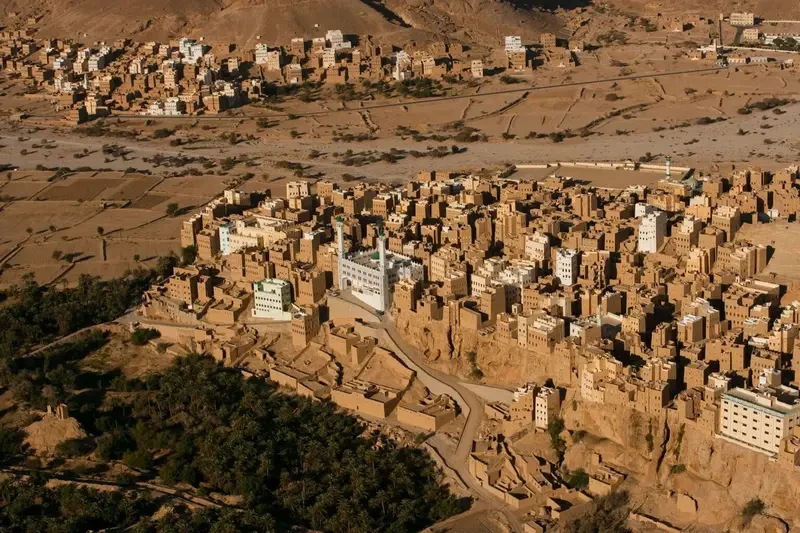
The city stands on a rocky rise overlooking wide areas of farmland and the surrounding natural passages. This gives it a distinctive panoramic view and makes it one of the region's most prominent mountain settlements.
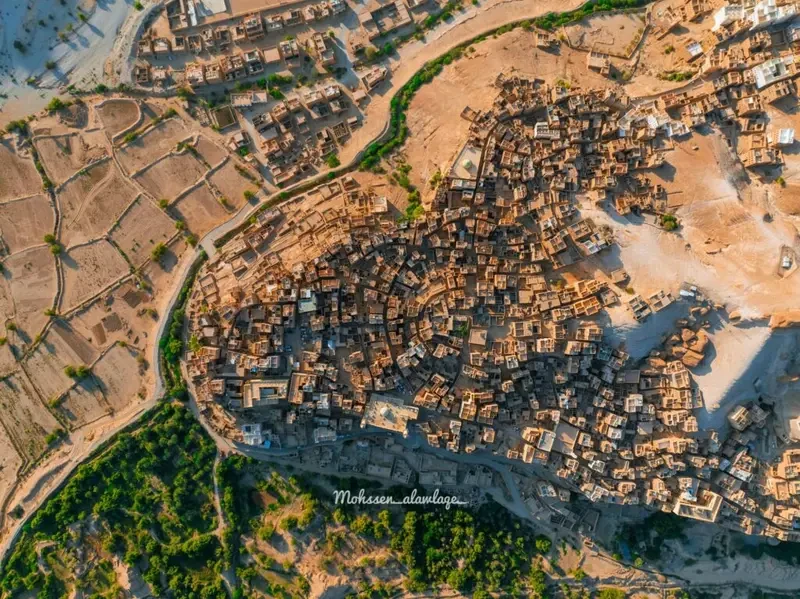
Rocky highlands and valleys surround Al-Hajrain, with palm trees and traditional farms spread throughout them, forming a natural tableau in which desert terrain blends with signs of agricultural life.
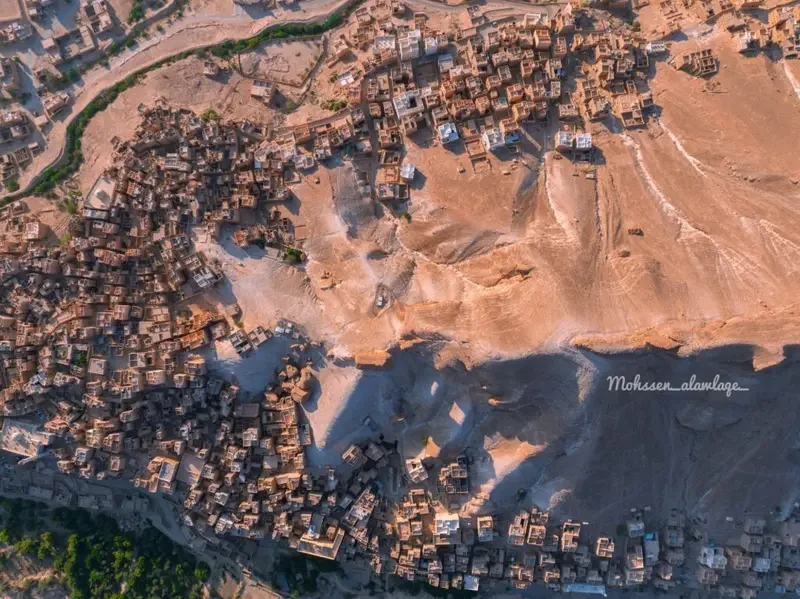
This location helped shape the city's urban identity, as its buildings and streets adapted to the slopes of the land and the nature of the rise on which it was built.
Historical Roots and the City's Founding
Al-Hajrain is linked to an ancient history that extends back to the early stages of settlement in Hadramout. The area around it was known for archaeological sites and settlements that reflect the depth of the civilizations that arose in southern Arabia.
The city lies near historic sites associated with the ancient kingdoms of Hadramout, most notably the archaeological area of Raybun, which provides important evidence of the development of settlement and religious and economic life in the region during ancient times.
Al-Hajrain's name is also associated with the historical heritage of the Kinda tribe and with accounts of the presence in the area of the pre-Islamic poet Imru' al-Qais bin Hujr al-Kindi. These accounts reflect the place the city and its surroundings held in literary and historical memory.
However, a distinction should be made between heritage accounts associated with the city and historical facts established by archaeological evidence, as no conclusive information is available to determine the year Al-Hajrain was founded in its present urban form.
Strategic Location and Commercial Role
Al-Hajrain gained geographical importance from its location at the entrances to Wadi Daw'an and along historic routes that connected the inland areas of Hadramout with the coast.
Its elevated location made it possible to monitor movement through the surrounding passages and helped provide the settlement with a degree of natural protection.
The trade routes that passed through the area also helped strengthen communication between the valley's inhabitants and other urban centers, as economic life was linked to agriculture, trade, and traditional crafts.
Historical accounts indicate that the city underwent successive political changes and had a presence in areas of influence contested by local powers in Hadramout at different times.
Traditional Architecture and Urban Planning
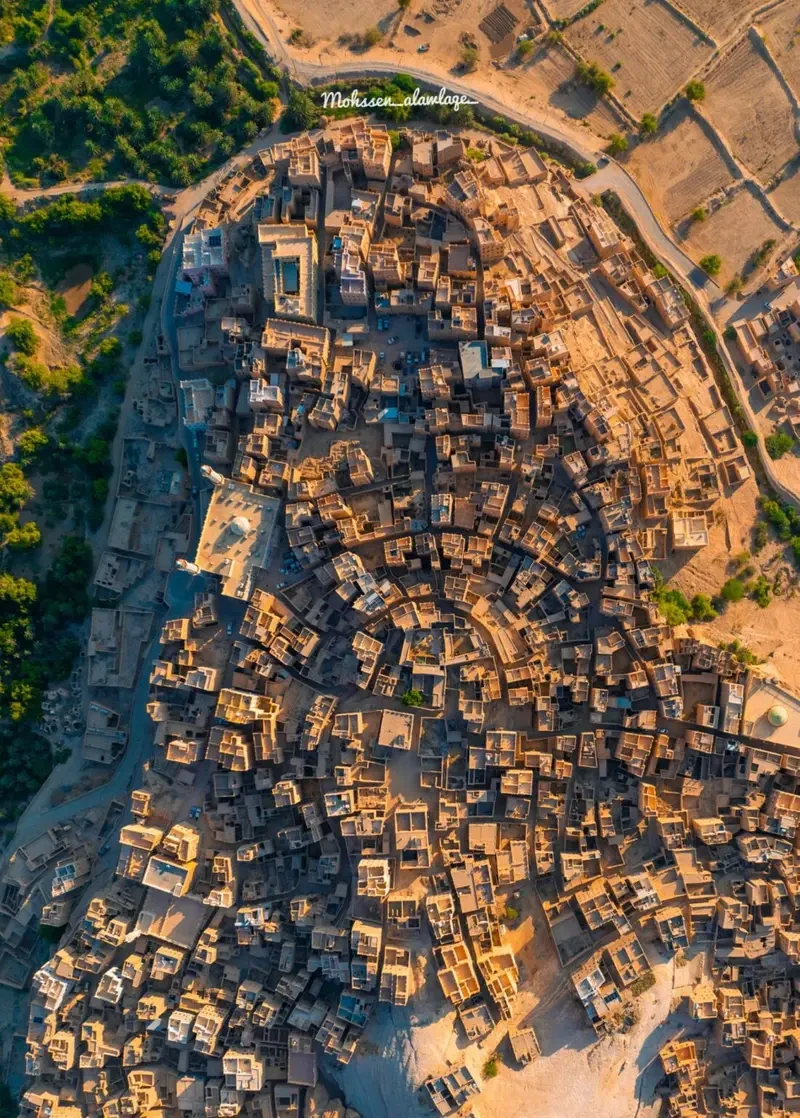
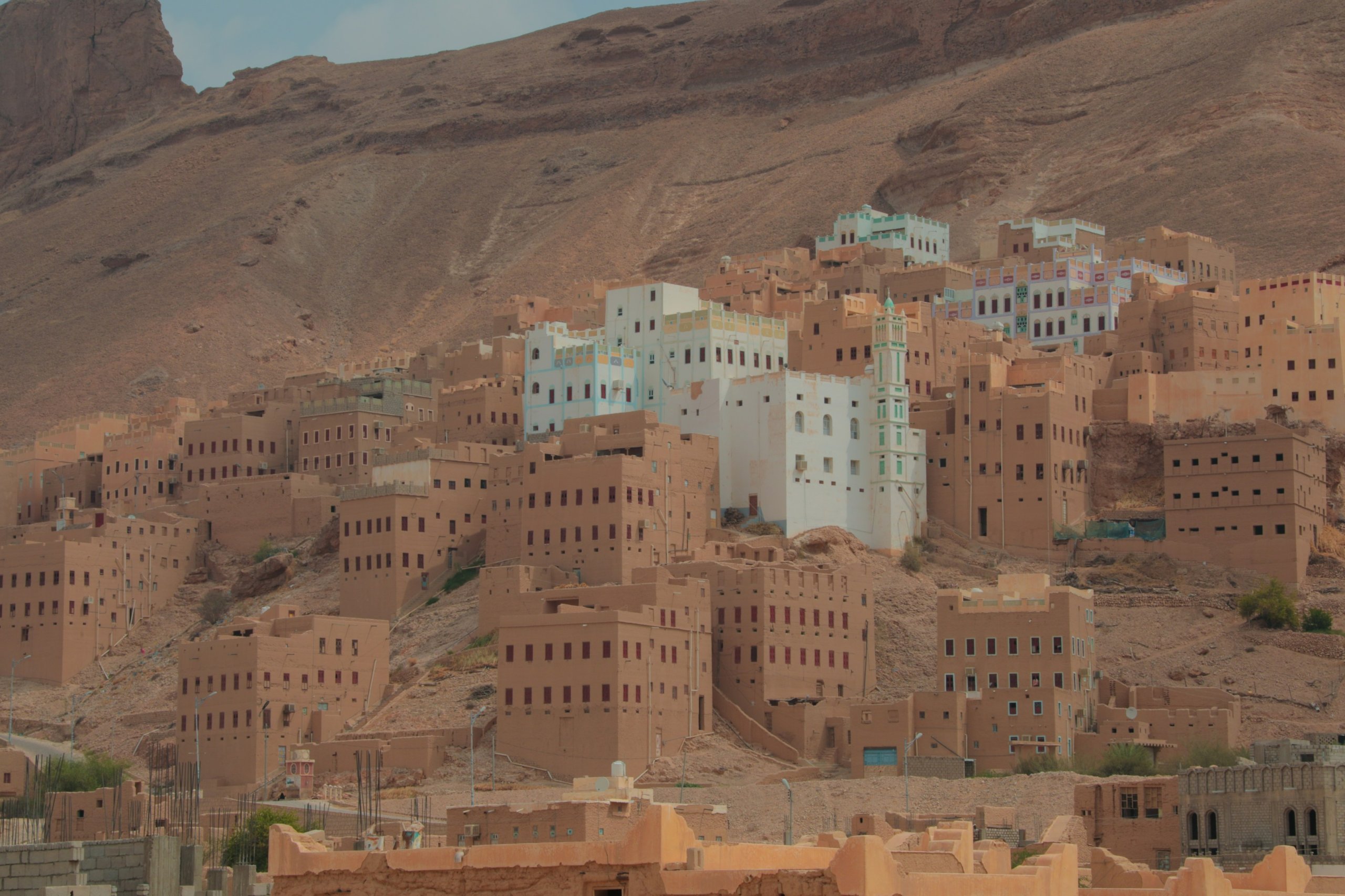
The city of Al-Hajrain is distinguished by a terraced urban fabric suited to the mountainous terrain. Houses are spread across different levels of the rocky rise and connected by narrow alleyways and passageways.
Hadrami builders relied on local materials, most notably mud, stone, plaster, and wood, to construct the buildings and shape their architectural features.
The houses are distinguished by traditional façades, wooden windows, and some local decorative elements, as well as flat roofs and closely clustered urban forms.
This style reflects the residents' ability to make use of the available space and incorporate the features of the natural environment into the design and arrangement of buildings.
The close proximity of the houses also helped create a closely connected social fabric, in which homes, passageways, and small squares are interwoven within an integrated urban environment.
Fortifications and Defensive Character
One of Al-Hajrain's most notable characteristics is its elevated location, which gave it important defensive advantages during historical periods when the region experienced unrest and competition for control of routes and urban centers.
The steep rocky edges provided natural protection for parts of the city, while some old structures were associated with surveillance and fortification functions.
This urban layout reflects the character of historic cities, which were often built on elevated sites to balance protection with easy access to farmland and surrounding resources.
Al-Hajrain and Scientific and Cultural Life
Al-Hajrain's importance was not limited to its geographical location and traditional architecture; it was also linked to social and cultural life in Wadi Daw'an.
Mosques, social gathering places, and traditional institutions helped preserve community ties and pass knowledge and customs from one generation to the next.
The city also reflects aspects of the history of Hadrami families who combined agricultural and commercial activity and contributed to sustaining life in historic urban settlements.
Al-Hajrain carries an oral and social heritage that includes customs, traditions, and local stories, an important part of its cultural identity alongside its buildings and physical landmarks.
Archaeological and Tourism Importance
Al-Hajrain derives its tourism appeal from its distinctive mountain location, terraced architecture, and sweeping views of Wadi Daw'an and the surrounding farmland.
It is also an important destination for researchers and those interested in traditional architecture, as it offers a clear example of the relationship between the natural environment and urban planning.
The city's value is evident in the preservation of aspects of its traditional architectural fabric, as well as its continued connection to the social life of its residents.
Alongside the other historic villages in Wadi Daw'an, Al-Hajrain forms part of a cultural landscape that reflects the architectural and cultural diversity of Hadramout Governorate.
Al-Hajrain and International Interest in Heritage
On 20 June 2025, the Republic of Yemen submitted the site “Haid Al-Jazil and Wadi Daw'an” to UNESCO's Tentative List of World Heritage Sites. The submission included a reference to the city of Al-Hajrain as one of the valley's most prominent historic cities.
This tentative listing is a step toward raising awareness of the area's heritage value, but it does not mean that the city of Al-Hajrain has been independently inscribed on the official World Heritage List.
This step underscores the importance of Wadi Daw'an's urban and natural landscape and the historic cities and villages it contains, which are distinguished by traditional building methods and the interaction between people and the environment.
Challenges in Preserving the Historic City
Historic cities built with local materials face challenges related to climate change and the effects of rain and floods, as well as modern urban expansion and the decline of some traditional maintenance practices.
The importance of preserving the city of Al-Hajrain is underscored by the need to document its old buildings, assess their structural condition, and encourage restoration work using materials and techniques compatible with its architectural character.
Protecting the city also requires attention to its natural surroundings and the visual landscape of the surrounding highlands and valleys, as these form an essential part of its historical and tourism value.
Involving local residents and traditional craftspeople is an important element in sustaining efforts to preserve the urban heritage.
Al-Hajrain.. A Hadrami Memory Worth Preserving
The historic city of Al-Hajrain remains one of the most prominent testaments to the long history of human settlement in Hadramout and to people's ability to adapt to the mountainous landscape and transform rocky highlands into integrated urban settlements.
Overlooking Wadi Daw'an, the city continues to stand as a symbol of traditional architecture and Hadrami identity, and as a mirror reflecting aspects of the region's social and cultural history.
Preserving Al-Hajrain means preserving the memory of the place and an architectural and human heritage worthy of study, documentation, and introduction to future generations.
Photo gallery